
Sicily
travel blog
See the Sicily photo gallery here
The island of Sicily lies at the foot of Italy, like a ball ready to be kicked. Its ancient name is Trinacria from the Greek Τρινακρία, which means “having three headlands”, although the modern name derives from an Iron Age tribe called the Sicels. This mountainous land, separated from Italy by the Strait of Messina, less than two miles wide, is the most populous island in the Mediterranean with about five million inhabitants. However, waves of emigration over the past century as a result of endemic poverty have meant that today around ten million people of Sicilian descent live scattered around the world.
The island is notable for being the sometime residence of that thuggish genius Caravaggio, for the ravages of drought (48.8°C was recorded in 2021), its 1000-year history of ice-cream making, and for Mount Etna, the icon of Sicily, at 3,323m the tallest active volcano in Europe. (The island is situated at the northern edge of the African Plate, which explains its fiery heart.)
Its central location on trading routes between Europe, Africa and the Middle East, has given rise to a long and rich history stretching back 16,000 years, but has also resulted in it being one of the most invaded places on the planet. Unwelcome guests have included the Greeks, Romans, Phoenicians, Normans, Ostrogoths and the Vandals themselves. Unusually for them the invasion by the Americans and British was actually a welcome one, liberating the island from the Nazis.
The Norman invasion led to the establishment of the Kingdom of Sicily which lasted almost seven hundred years (1130-1816), although during this time the baton passed between Aragon, Spain, Savoy and then the Hapsburgs. The island finally became part of Italy in 1860 following the invasion of Giuseppe Garibaldi.
Sicily is well known for being the home of the mafia. The Cosa Nostra (“our thing”) first emerged in the 18th century, hired by the wealthy as protection against roaming brigands, and is still going strong today. Its tentacles reach as far as America. “Off they go, through the streets of Passo di Rigano, Boccadifalco, Torretta and at the same time, Brooklyn, Staten Island and New Jersey. Because from Sicily to the US, the old mafia has returned" (La Repubblica). The mafia's most distinguished victims are respectfully named cadaveri eccellenti (“excellent corpses”).
©wonderfulworldblogs.com
Palermo
Palermo, on the north-west coast, was founded by the Phoenicians in 734 BC (making it 780 years older than London). It is now the island’s cultural, industrial and commercial capital, with a population of 1.3 million.
Stepping off the plane the horizon is dominated by soaring cliffs like castle battlements piercing the crisp, icy air (reminding me of the view of the Himalayas at Kathmandu airport). The atmosphere in the small terminal was relaxed, aided by the sound of Frank Sinatra crooning Christmas favourites.
Down tree-lined boulevards the modern tower blocks of the suburbs give way to the ageing apartments of downtown, from whose balconies washing hangs, even in winter. The city centre is situated on rising ground above a busy port, dominated by characterless ships many stories high. It is punctuated by two opera houses and a multitude of old churches. The way of life seems relaxed - the bikers probably wouldn't run you over like Roman ones might.
Down a narrow street with worn cobblestones the air was thick with the smoke of cigarettes and barbecues, and people twisting to the riotous sound of pop. Turning a corner, the huge, ornate towers of a 12th century Norman cathedral rose up from a square lined by vertiginous palms and an excavated pavement of mosaics of fish and turtles from Roman times.
On one side of the cavernous interior there is an innocuous doorway by a strangely unimpressive group of royal tombs. Climbing up a narrow circular stairway you emerge in the cool air and are rewarded by a spectacular panorama of the roofs of the old town framed by mountains and the dark blue sea. On Christmas Day I attended the missa at the cathedral, packed with penitenti standing reverently for long periods while cantors intoned, priests rabbited on and the choir sang familiar carols. Even the statues bowed their heads respectfully.
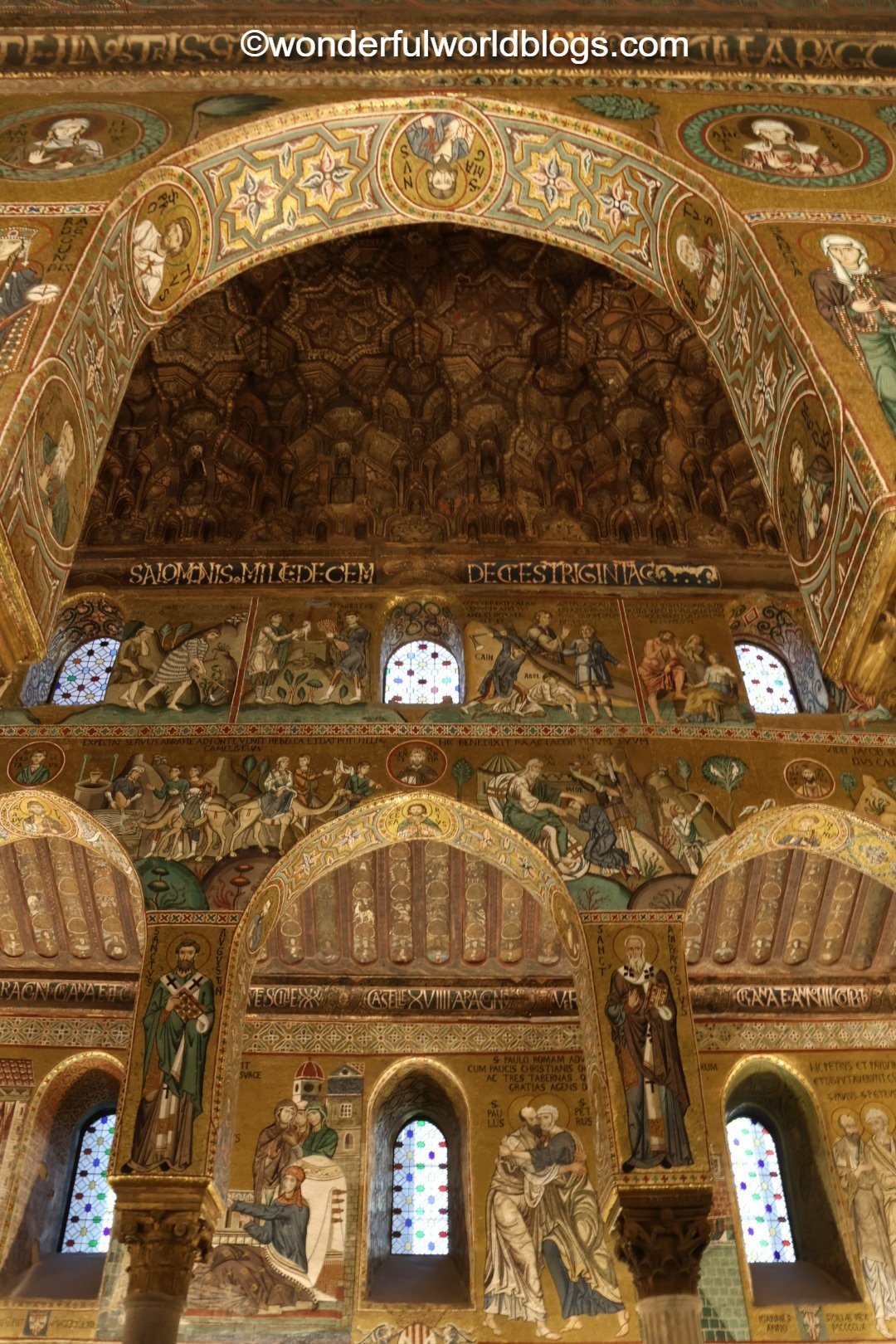
Up the street from the duomo are the imposing walls of the Palazzo Reale, built by the Saracens in the 9th century as a residence for kings, and now, with airport-style security, hosting the regional parliament. Through a grand courtyard you enter the Cappella Palatina dating from 1143, its slender columns leading the eye up to a great height relative to the chapel's size. Every inch of the barrelled ceiling is adorned with intricate Christian mosaics and golden Islamic figuration sufficient, perhaps, to impress even the royals who once worshipped there. In the palace's exhibition space pottery by Picasso looked strikingly similar to objects discovered amongst the city's 4th century BC walls.
Cefalù
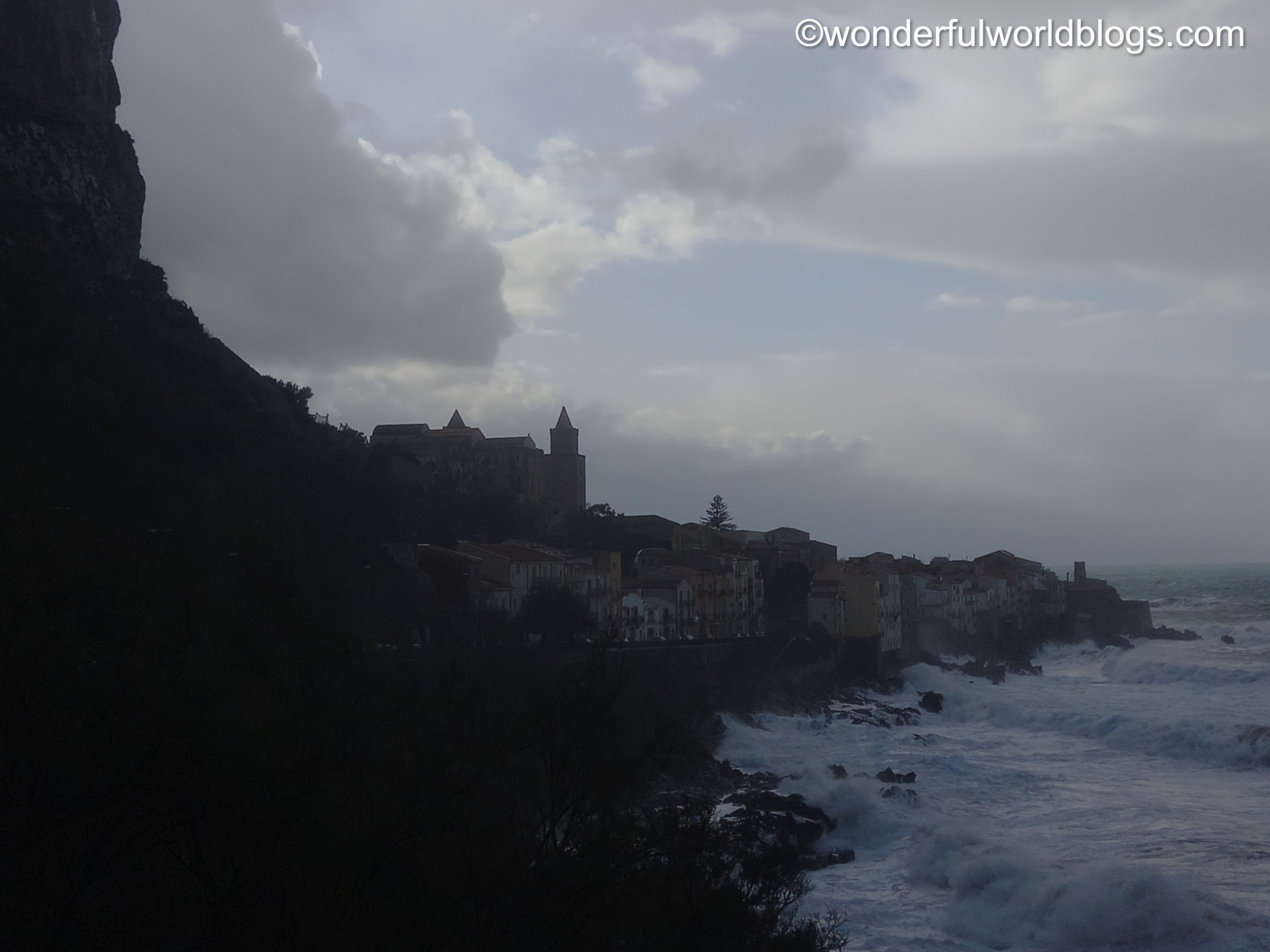
From Palermo there are a few trains a day east along the Tyrrhenian coast to the small town of Cefalù. Along the wave-battered coast with its backdrop of brooding mountains, their heads lost in the clouds, are crumbling watch-towers guarding from enemies long-since departed. Its bohemian lanes leading up from the harbour and medieval laundrette are overshadowed by the scale of its cathedral, and its backdrop La Rocca, a sheer, 270 metre cliff face.
The cathedral was founded in 1131 by Roger II, supposedly in gratitude for the survival of his ship from one of the umbrella-destroying storms that still beat down mercilessly today. Taking shelter in the quiet wooden pews below the immense height of the nave I gazed upward at the huge figures of the holy story, depicted vividly in medieval mosaics. They looked back at me humanely, bathed in a soft yellow evening light.
Monreale
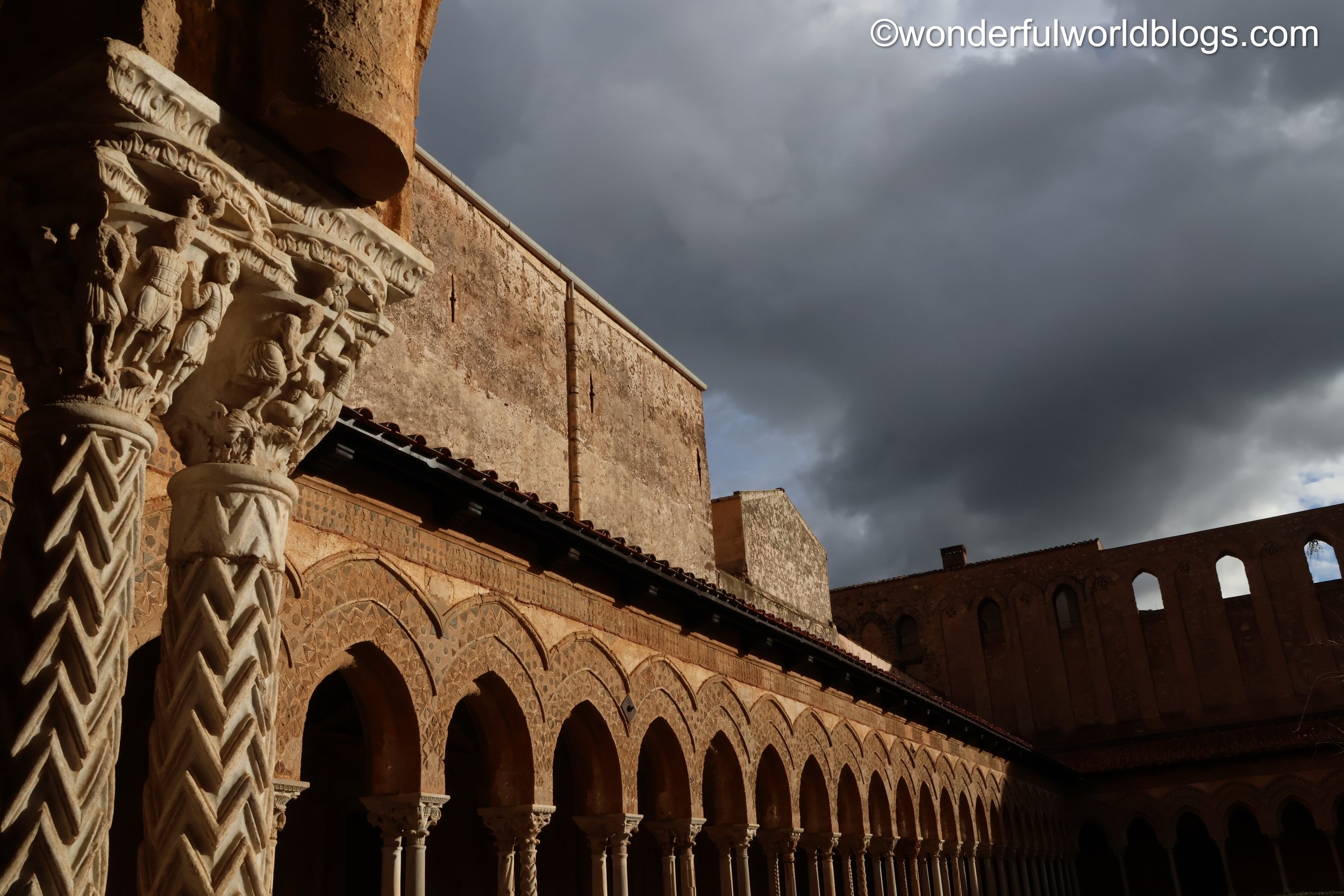
At the head of a broad valley above Palermo is the hill town of Monreale. In its mighty duomo there are further mosaics, including a twenty-metre-high Christ. Despite its immense size the cathedral was completed in only a decade (a feat that would test even modern builders), resulting in a glorious harmony in its design. Each of the 120 columns of the cloisters next door is carved with scenes from the bible, telling their story as clearly now as they would have done to medieval monks doing their daily rounds.
Caravaggio
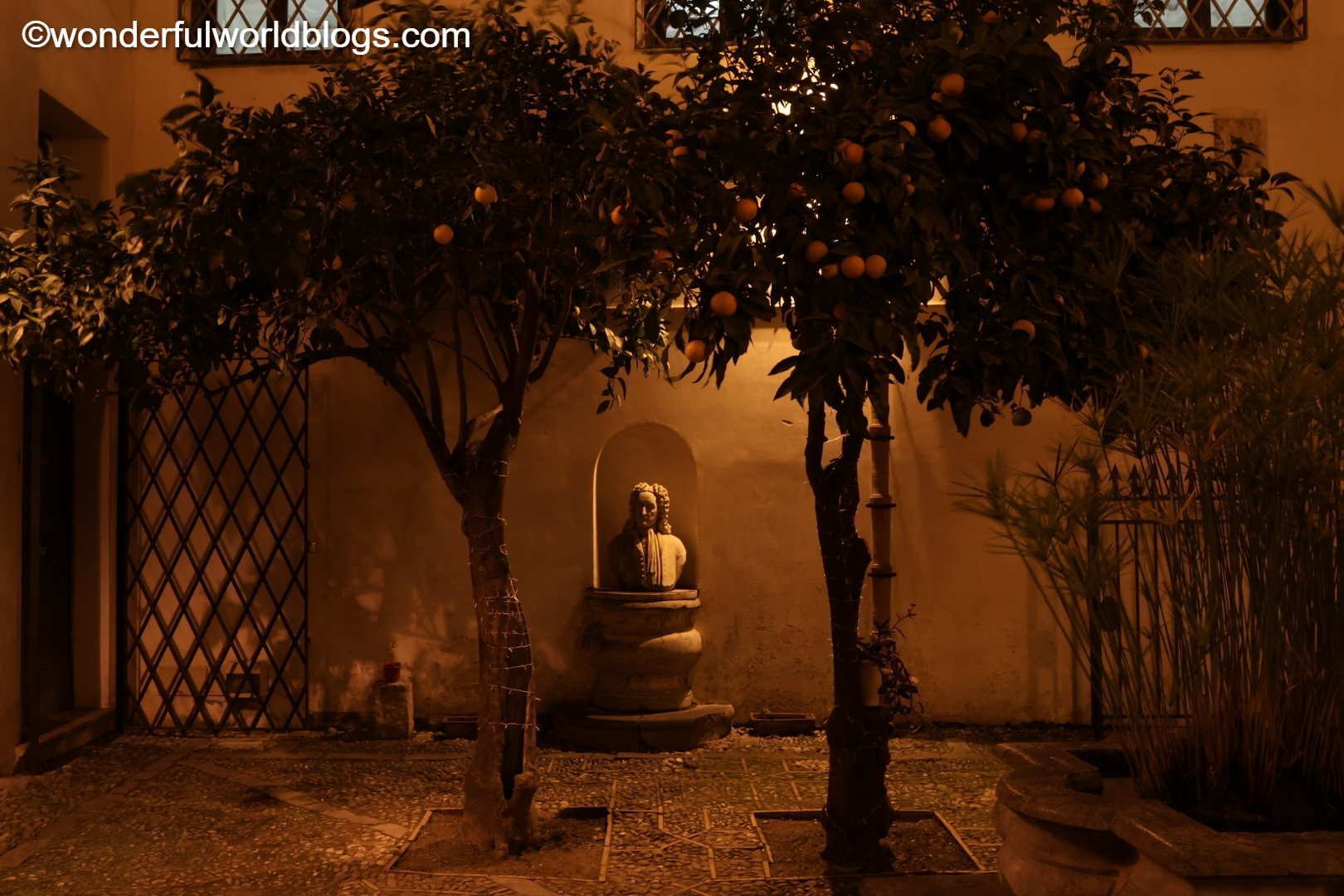
Down a gloomy alleyway off a quiet cobbled street in the old quarter of Palermo is an unusually tall doorway. Climbing a few steps you enter a small courtyard where a bust of a bewigged gentleman peers out from beneath twin orange trees. The Oratorio di San Lorenzo was built in the 17th century, but by the second half of the 20th the building had been a family residence for years. One stormy night in 1969 someone picked the lock on the door to the chapel and rudely cut Caravaggio’s Nativity from its frame. Fifty-five years later, despite exhaustive efforts, there still remains a bleeding wound where once that great treasure hung. A replica reminds us of what was lost - a sensitive depiction of the holy family with a rather precariously suspended angel gazing down. The best guess as to the original's whereabouts comes from Gaspare Spatuzza, a mafia grass, who claimed in 2009 that decades earlier his masters hid the fragile canvas in a stable. There, intentionally or not, in an end worthy of a Hannibal Lector film, it had been slowly ripped apart and eaten by pigs and rats, then the remainder burnt. The loss is only slightly alleviated by the fact that it is a story wholly in keeping with the murky deeds of the artist himself.

If you are enjoying WWB
please Buy me a coffee
by clicking on the image above.
This will help fund the website
& future projects.
Thanks for your support!
Matthew
Stromboli
Any apprehension I might have felt on the journey east along the coast and thence by ferry to the Aeolian island of Stromboli, dominated by one the world's most active volcanos, was tempered by not having to listen to the volcanic snoring in the hostel dormitory in Palermo any longer.
Le Isole Eolie (named after Aeolus, master of navigation and ruler of the winds) have been inhabited since at least the Bronze Age (there is a villaggio prehistorico on Panarea). In the 16th century most of the population was transported to Africa by the Ottoman Hayreddin Barbarossa to become slaves. During World War Two the islands were used as a prison and Mussolini's own daughter was incarcerated there. The present-day economy is based on tourism, boosted by the islands' appearances in various films including ones starring Ingrid Bergman. Until a few decades ago a cow would be pushed overboard the ferry as it approached Salina, after which the poor animal would swim to shore only to find a butcher waiting with his knife!
Leaving the mainland my stomach bounced uncomfortably up and down on the waves while I was regaled by the stories of one of the regular ferry passengers, a quack German doctor for the village of Ginostra, population thirty. On the opposite side of Stromboli from the main settlement, which itself has less than five hundred inhabitants, Ginostra's pier was recently washed away in a storm and the only transport is by mule. The German told me he used to work as a pilot in Africa before retraining as a dentist and then as a doctor. With an average of only one patient per year his clinic must have the shortest waiting time in the world. With wide open ears I listened as he explained how the Covid vaccine had killed thirty million people and how Donald Trump was going to save the world. I think I would rather go to one of those mules for a check-up.
From a distance Stromboli has a classic volcano shape - a steep-sided triangle - and from its upper reaches a permanent cloud of smoke billowing forth, even if smoking by its inhabitants is banned. Franco, my elderly host, who has lived here his whole life, collected me off the jetty, correctly guessing my name as there were few other tourists. He drove me to his homely villa up one of only two streets, each so narrow that only a golf-cart could get up them. Later that evening, walking a full five minutes to the centre of town, I joined a boozy festival taking place around the church. Like many of the others I then progressed to the only watering hole, Bar Ingrid, where Bergman herself once drank. By the end of the night I felt like I had already met most of the island's population. I wandered home down a lane in perfect silence apart from the sound of the waves, and in pitch black but for the faint glow of lava reflected on the clouds.
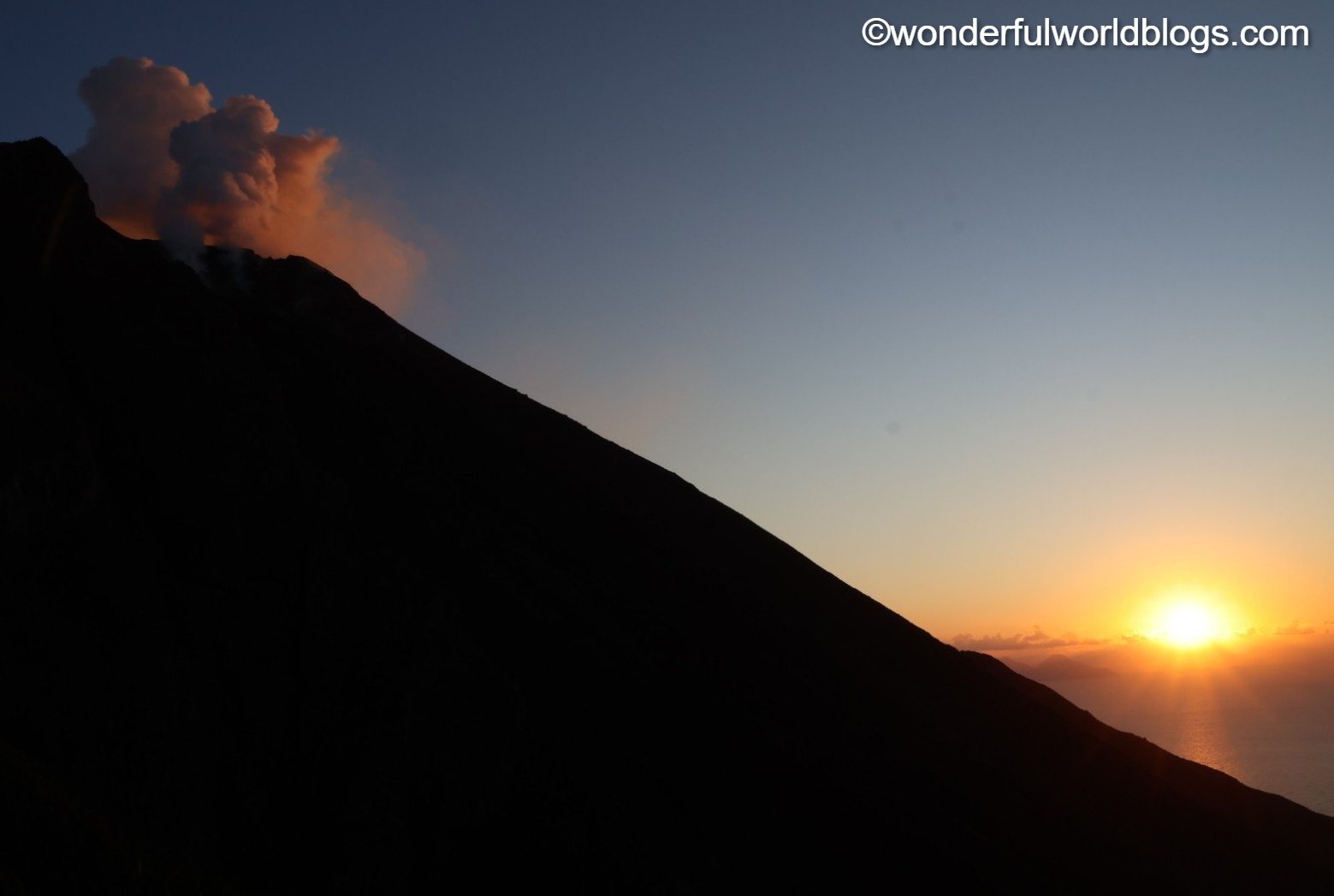
The next day I joined a group walking around the headland, passing black sand beaches lined with white washed villas. We climbed up a steep slope towards the Sciara del Fuoco (Stream of Fire), the workshop of Jupiter's son Vulcan (God of fire and metalworking). This has been erupting almost continually for 2,400 years. After an hour or so you reach a high ridge from where you can watch Stromboli spewing forth her fiery innards. Seen most spectacularly when night fell the jets of lava acted like a beacon atop the pitch-black slope, while the sun set in glorious pastel shades across the sea far below. Despite the regular eruptions the Strombolans live happily on a tiny stretch of inhabitable coastline, grateful for their fiery friend who built their home and continues to draw streams of guests to her shores.
Sad to leave Stromboli I arrived back on the mainland and walked from the port to the train station past fishmongers with their impressive cuts of swordfish, derelict industrial sites, fields of lovingly tended crops and ripe oranges fallen from their trees.
Messina
Situated on the north-eastern tip between the Tyrrhenian and Ionian seas Messina was the site of Sicily's first Greek colony in the 8th century BC. It boasts the island's deepest natural harbour and one of its major ports, but sits on a major faultline. This fractured in 1908 destroying 98% of the buildings and killing 84,000 in the worst earthquake ever to hit Europe. The city's plight and the hardiness of its citizens is symbolised by its 12th century Norman cathedral. This was destroyed in the 1908 earthquake, then rebuilt, then destroyed again by the Allies (Messina was the most heavily bombed of all Italian cities in World War Two), and then rebuilt again post-war. On my brief visit it was obvious that reconstruction has been done excellently well. This is a good-looking, modern city, gazing across the Strait to the rest of Italy.
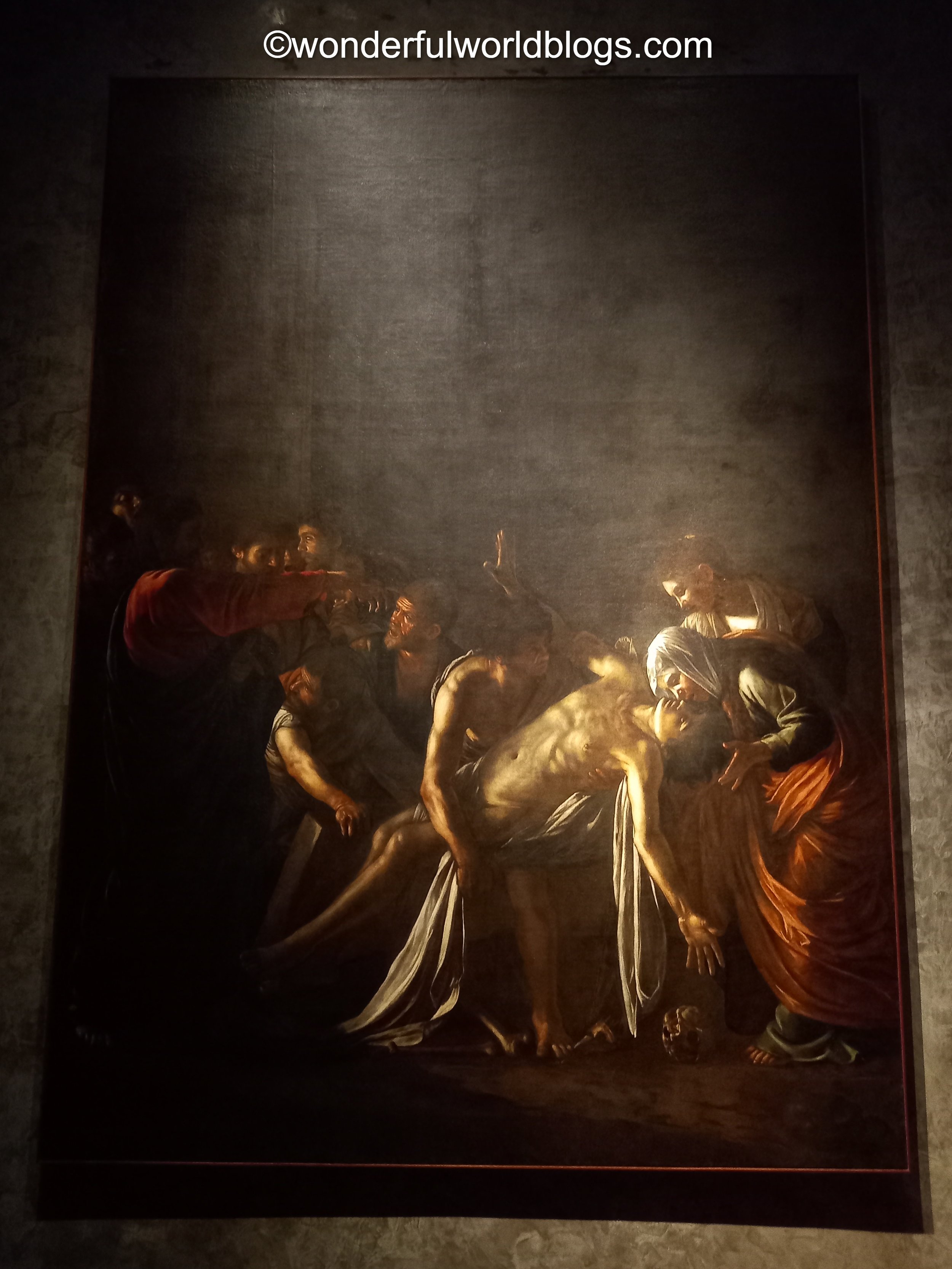
In the city's gallery there are elegantly composed religious paintings by perhaps the city's most famous inhabitant, Antonello da Messina, and two very different ones by one of its most famous visitors, Caravaggio, which he painted in 1609 on the run from the Knights of Malta. The subjects are commonplace - The Adoration of the Shepherds and The Resurrection of Lazarus (the latter perhaps a reference to the merchant de' Lazzari who commissioned them). In contrast to the pastel shades and calm compositions of da Messina, the size (twice the height of a man) and drama of Caravaggio's canvases draw you in. The spotlit actions of the protagonists depicted with great tenderness and emotion, stand out from the large areas of darkness that surround them, waiting to swallow them up. These pools of nothingness work compositionally to add breathing space to the canvases, but may also be simply a result of the artist being in a hurry, feeling the breath of armed men on his back. Soon Caravaggio would head across the narrow strait to mainland Italy where trouble would follow him. Within a year he was dead.
Taormina
South of Messina the railway hugs the rocky coastline before arriving at the beautiful art-deco station of Taormina. From there a bus carries you up a winding road to the old hilltop town. Built by the Greeks and Romans and once frequented by DH Lawrence, Oscar Wilde and Greta Garbo, the town is now invaded by hordes of tourists. Sadly its narrow cobbled streets and picturesque squares are made ordinary by the luxury fashion boutiques that you can find anywhere where people have too much money to spend.
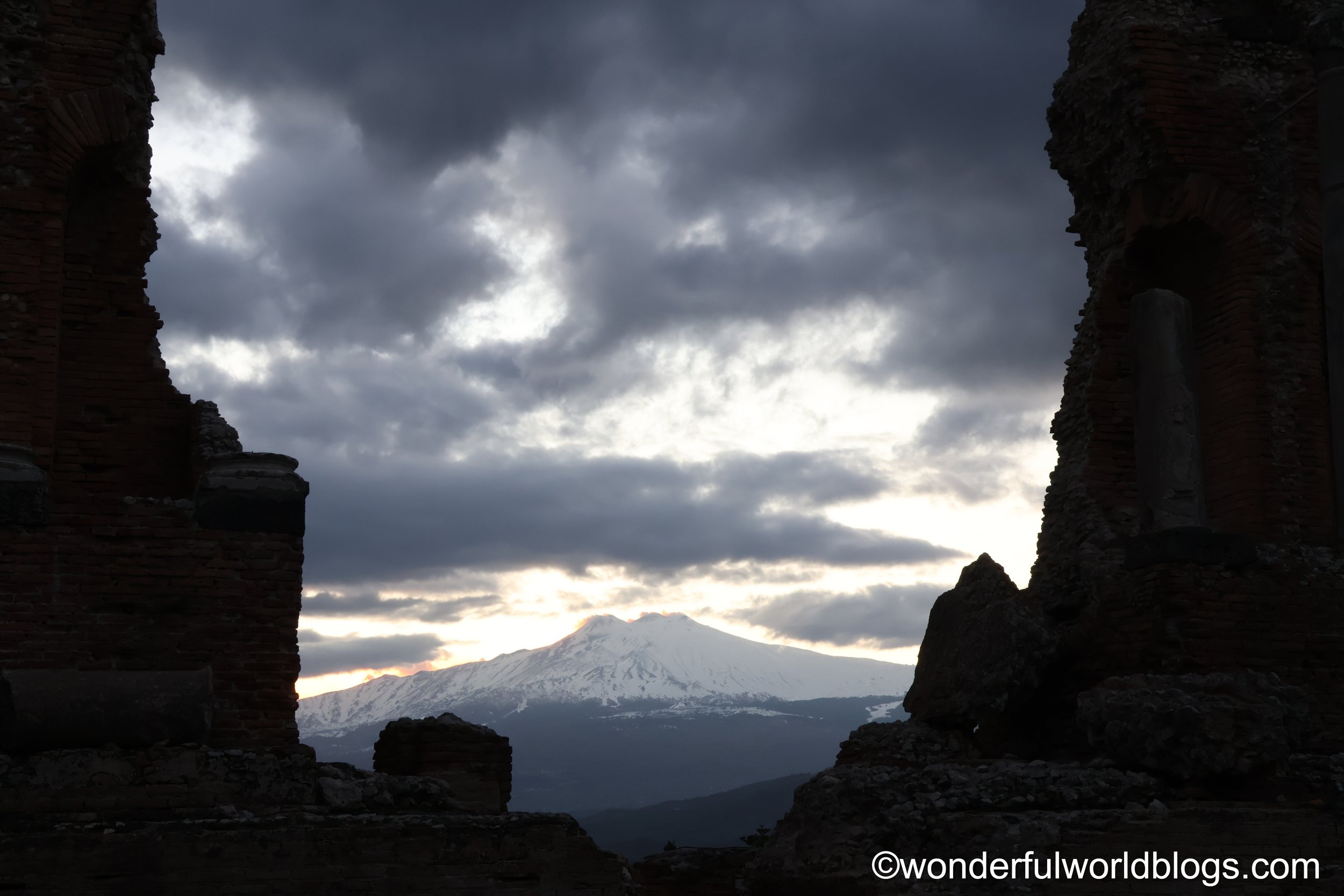
Apart from the shops and gelati the town's main attraction is the Teatro Greco, which has been drawing audiences of up to ten thousand for more than two millennia for plays, gladiatorial combats and, more recently, the Taormina Film Festival. The Greeks carved the amphitheatre out of the hillside, its comfortably designed terraces facing the snow and fire of Mount Etna, which forms perhaps the most spectacular backdrop of any theatre in the world.
Catania
Founded by the Greeks in the 8th century BC Catania is Sicily's second largest city. It is notable for its twenty-four kilometre Roman viaduct, for having been the home of the composer Bellini (Pasta alla Norma is a popular dish), and for its proximity to Mount Etna.
First impressions are of a big, noisy city by the sunny sea, with ageing, graffiti-covered apartment blocks. Heading into town I stumbled across the grand old Bellini opera house, the sound of motorbikes duetting with church bells.
The city's main square is a grand 18th century creation centred upon a statue of an elephant made of lava, which is supposed to protect the inhabitants from Mount Etna, that looms ominously over them at the end of Via Etnea. The centre is dominated by the impressive Duomo. Like many of the city's 17th century buildings its Baroque facade was constructed after a huge earthquake in 1693 that destroyed much of the 11th century original, which itself was built on the site of 2nd century Roman baths.
In a scene worthy of a grand Romantic opera a huge, frenzied crowd gathered in front of the cathedral, accompanied by a cacophony of bells and piped organ music. All the priests of Catania processed past in homage to the city's patron Saint Agata, while inside Bellini and long-dead kings slept soundly in their tombs. Above the composer's resting place there are inscribed words from his opera La Sonnambula (The Sleepwalker): "Ah! Non credea mirarti sì presto estinto, o fiore" ("Ah! I did not believe you would fade so soon, oh flower").
©wonderfulworldblogs.com
Etna
From the city's historic centre, through nondescript suburbs, busy roads draw you inexorably upwards towards Etna's smoking peak, at 3,323 metres Europe's highest volcano, and one of the most active in the world. Her long history of eruptions dates from 485 BC. In 1669 lava reached the city walls. In 1971 the observatory that was supposed to provide an early warning was itself destroyed.
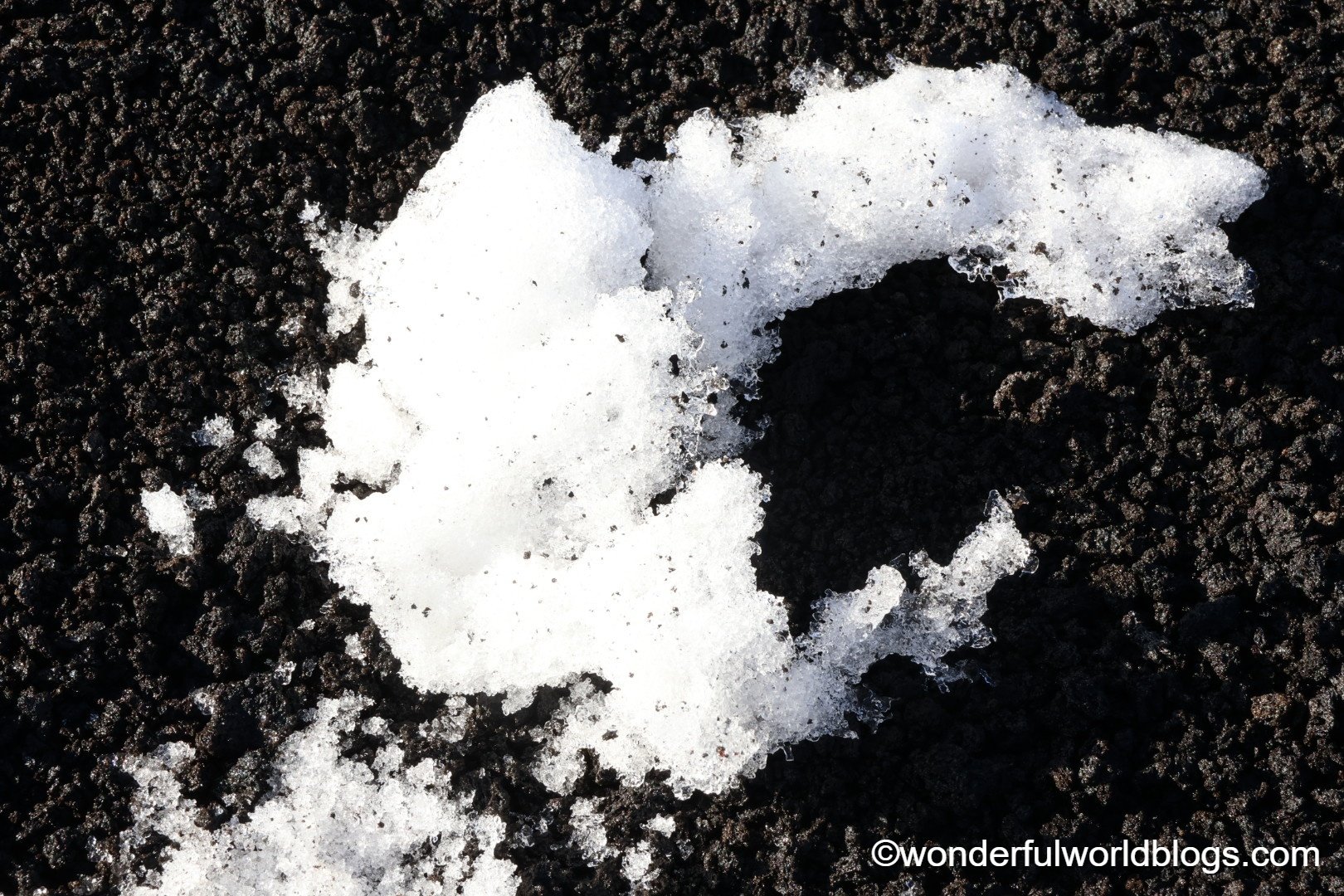
Past the last town Nicolosi (where you can only imagine the insurance premiums), layers of old lava lie like folds of icing. Young trees sprout, huge rocks sit where they were once deposited by otherworldly forces, and some very brave tortoises scrape a living. Higher up, where an altitude-induced headache starts to kick in, the black, crunchy ash contrasts with the pure white snow, out of which carefree people build snowmen. Thence a cable car carries you above the clouds. The sky was clear apart from the smoke issuing forth from Etna's great chimneys, still high above, where snow, fire and the blackened earth coalesce.

If you are enjoying WWB
please Buy me a coffee
by clicking on the image above.
This will help fund the website
& future projects.
Thanks for your support!
Matthew
Siracusa
The early morning sun struggled to break through a mist as thick as the smoke that belched forth from factory chimneys. Travelling by train between cities as beautiful as Catania and Syracuse the ugly tangles of chemical pipes and port facilities along the coast certainly made for a contrast, even if they do provide much needed jobs.
Syracuse, one of the fabled cities of the ancient world, has a history stretching back to its 13th century BC Neolithic tombs. Due to the natural harbour, fresh water sources and location on trade routes between the Middle East, Africa and Europe, it became the most important city in the west in the 5th century BC, with a population three times that of the present day. A great power, but also a great prize, in 413 BC the Greeks assembled one of the most formidable armadas of the ancient world and conquered the city, as chronicled by the historian Thucydides. In 211 BC, despite the military inventions of Archimedes, Siracusa fell to the might of Rome, the great Greek being hacked to death in the process.
The city's heart has always been the island of Ortigia. Only a kilometre long its maze of lanes open out into piazzas graced by elegant buildings that were rebuilt in the Baroque style after the same earthquake that destroyed Catania in 1693.
Il Duomo
The duomo, situated in what has been called Sicily's loveliest square with its creamy paving stones and opulent facades, appears in the 1st century BC chronicles of Cicero. The building's original doors, now long gone, were made of ivory and gold and inscribed with what are believed to have been the first portraits in European art. Entering through the 'modern' door below life-like Baroque sculptures that gaze down at you like posh pigeons, there was a service going on in the sensitivity lit interior. The structure illuminates the cathedral's story, incorporating columns from the original Greek temple, Romanesque arches and a Baroque altar, sitting on a floor of coloured geometry.
Il Teatro Greco
In its modern suburbs, rebuilt after bomb-damage during World War Two, Siracusa is blessed by a plethora of ancient buildings. The most renowned is the Teatro Greco, a semi-circle of terraced seats gazing across the ocean, over which ancient voices once echoed. On the ridge above the stones are worn with the tracks of carts that passed by long ago. Drivers would have stopped to drink at the natural springs that still flow today. To one side there is a huge pit, now filled with lush foliage, created by extensive quarrying for the city's many monuments. The excavations were so deep that an immense cave was created, curving away into the darkness, aptly named L'Orrechio di Dionisio (The Ear of Dionysius).
Museo Archeologico
At the nearby archaeological museum you can get pleasantly lost amongst the plethora of confusing but richly evocative displays, mainly of beautifully designed pottery (that would be useful additions to your cupboard), decorated with flat but expressive cartoon-like figures depicted in simple two-colour schemes. These show how people would have lived in ancient times, as well as mythological scenes of anthropomorphic creatures. The level of preservation is incredible. Imagine how your crockery would look after 20 years, let alone 2000! In another section are equally evocative displays of coins and jewellery, many of gold, their value demonstrated by the thickness of the bank-vault-like doors that protect them.
La Basilica di Santa Lucia
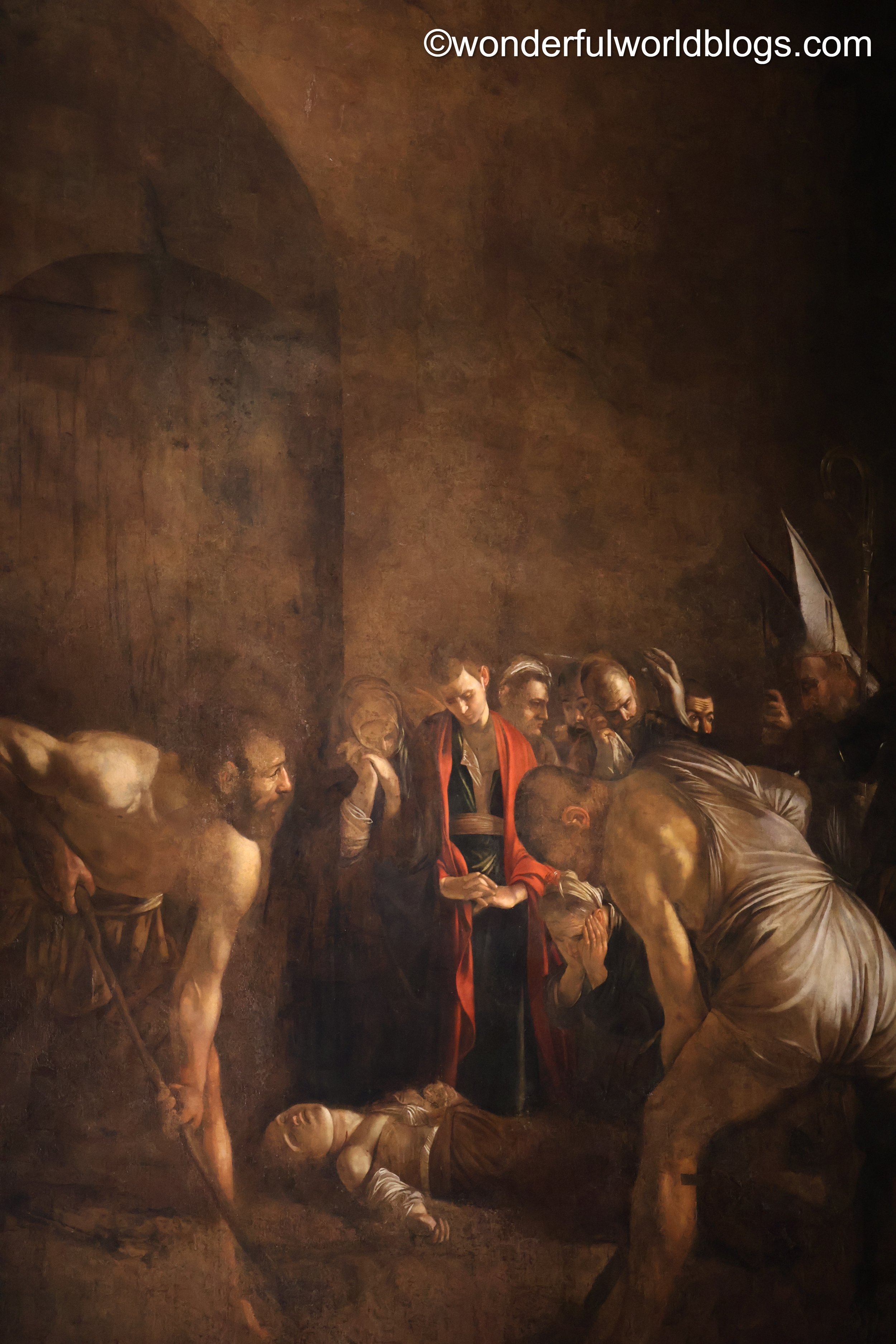
Someway across town at the top of a large open square where kids play on bikes and the sound of African drums blends with the smell of spliffs, stands a plain, sandy-coloured church. The building was constructed on the spot where the city's patron saint, Lucia, was supposed to have been martyred in 304 AD. No stranger to violence, having escaped from a Maltese prison where he was being held on a charge of murder, in 1608 Caravaggio was commissioned to paint a work in the Saint's honour. The lighting of this great canvas is subdued (you have to pay to illuminate it for a few minutes), but in keeping with the sombre subject - the moment at which Lucia's body was lowered into the ground by two muscly gravediggers. One of these men is supposed to have been a knight of Malta, who would no doubt have been happy to oblige the artist by lowering him into his own grave. (Hopefully the security is better in this church than the one back in Palermo, although I didn't see anything.)
Il Teatro dei Pupi
Returning to Ortigia I attended a performance at the Teatro dei Pupi, a small stone theatre with a stage only a few metres across, but ample in size for the traditional Sicilian puppets brought to life in dramatic voices and slightly comic, jagged movements. The story, of knights in armour and maidens in flowing dresses, concerned Orlando and the Fortune Teller. Orlando drinks from a magic fountain that turns hatred into love and vice versa, which must have been very confusing for the fortune teller.
©wonderfulworldblogs.com
Agrigento
The south of Sicily is more sparsely populated than the north, and eastwards from Siracusa the train line petered out long before my next destination, Agrigento, situated roughly mid-way along the coast. As a result one is forced to take the long way round, by bus through the gentle green hills and rich farmland of the interior.
In the old part of this charming hill town, up a narrow alleyway, is situated the church of Santo Spiritu, dating from the 13th century. Early in its history the building was bequeathed to the Cistercian order by a baron mourning the death of his wife, and it has been their home ever since. Although the interior is decorated with ornate stucchi (plaster) sculptures by the renowned artist Serpotta, in common with a small but eager bunch of tourists it was something else that had sparked my interest. Pleasingly, just as I had read beforehand, upon ringing the bell at a simple wooden door in the square outside, you are admitted by a smiling nun who serves the most delicious selection of home-made dolci, in recipes that date back seven centuries.
La Valle dei Templi
Good as the dolci are Agrigento's main attraction is situated on a long ridge below town, sloping down to the sparkling sea. The Valley of the Temples is not just the largest archaeological site in Europe (and there is still much to be excavated), but also the location of the some of the best-preserved Greek buildings not just in Sicily, but in the whole world.
Through a gap in the still formidable great wall, that makes use of the naturally defensible lie of the land, you enter what was once Akragas, a city founded in 581 BC. It grew so rich that people even had tombs made for their pets. Upon seeing the living standard of the inhabitants, Plato remarked: "They build like they intend to live forever, yet eat like this is their last day."
Upon entering the site is littered with finely sculpted blocks, the result of great labour, but now strewn about in heaps as if by a giant gone bowling. This only makes the surviving arches, lines of columns and, finally, whole temples that you encounter seem all the more impressive. (In addition the sight of an ugly motorway flyover off in the distance makes the Greek architecture appear all the more beautiful too.)
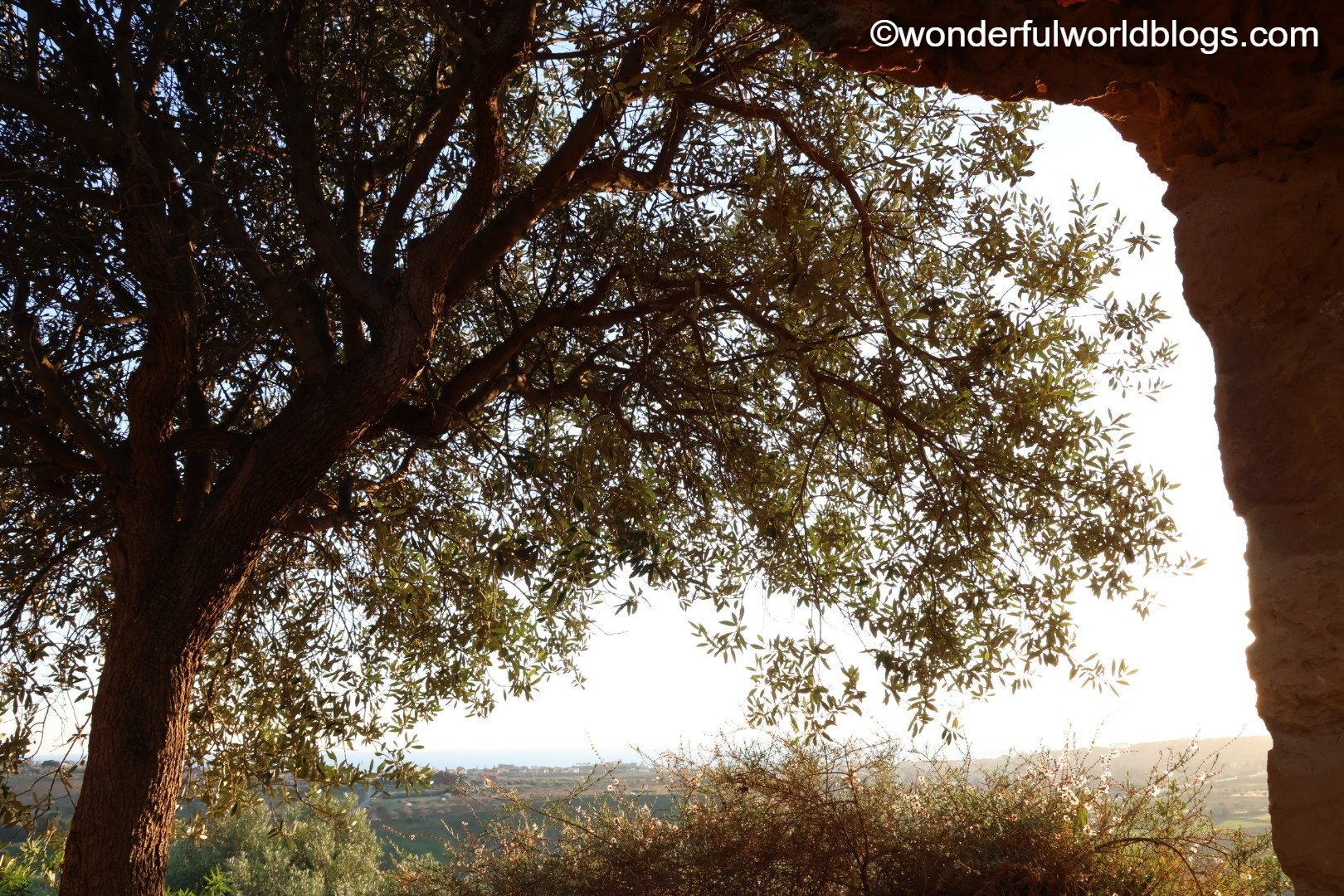
Following the Via Sacra, lined with Christian burial chambers and small flowers, you encounter the Temple of Juno. (Remarkably this still shows fire damage from the sacking of the city by Carthaginians in 406 BC.) Further on the Temple of Hercules and the Temple of Zeus, the largest Doric temple ever built, are now a large pile of rubble.
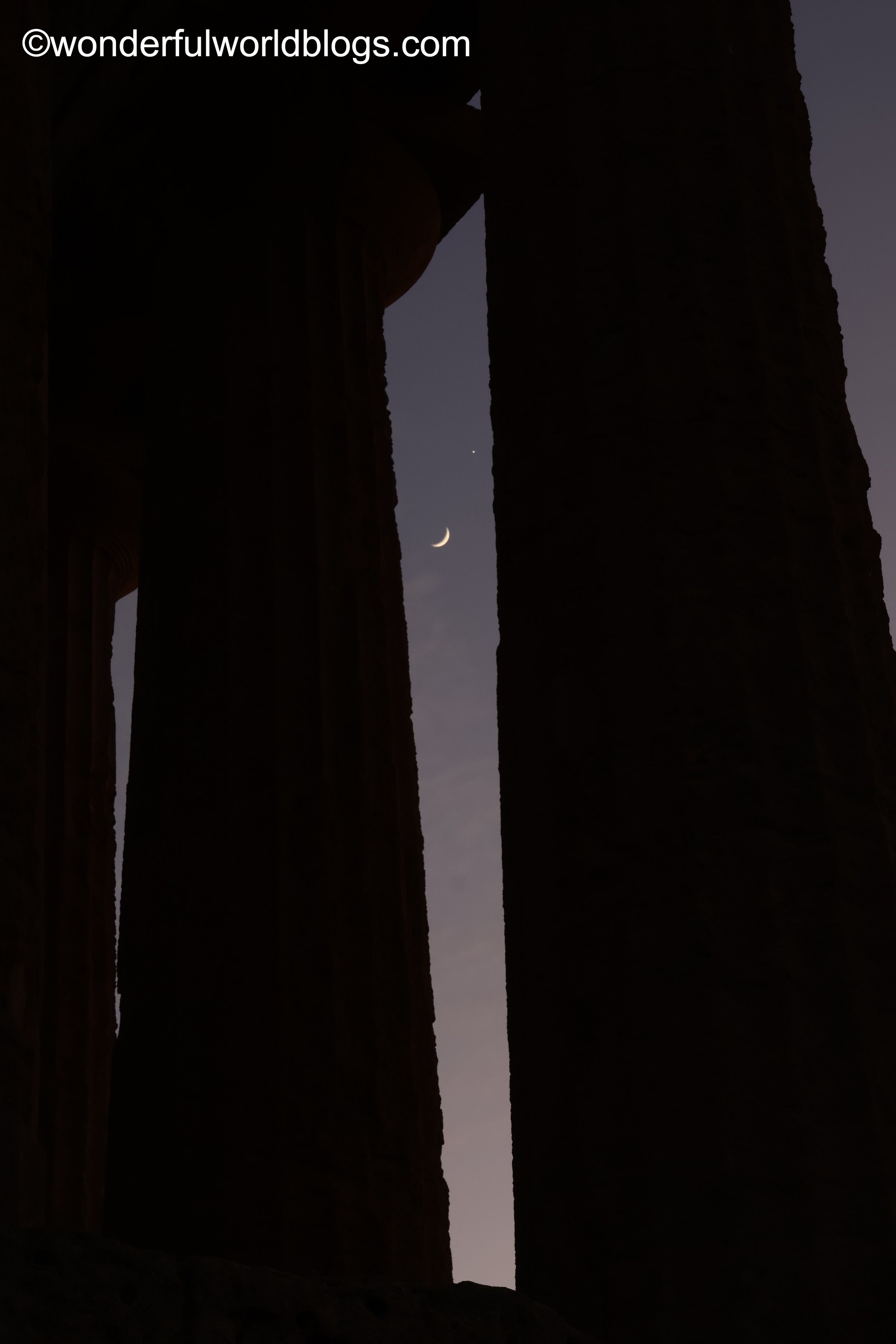
Finally, at the highest point of a long processional road with a commanding view of the sun-baked coast below, stands one of the best preserved of all Greek buildings, the Temple of Concord. Partly due to its use as a Christian church from the 6th century onwards, from a distance the structure looks so well preserved that it could almost be new. The inner sanctum is largely intact, two rows of columns partially obscuring the view of the proceedings that you can imagine once went on inside, adding to the mystery and the sense of us and them. Monet would have had a field day with the changing light as the sun set.
In the nearby museum the past is brought alive in pottery. The Greeks and Romans can never have realised how important their works would now be to our understanding of their culture. Looking at the numerous musical scenes depicted it is tragic that no ancient music has survived, because no-one had the thought or knowledge of how to notate it. Imagine if all ancient literature was lost.
Return to Palermo
Through the rolling hills and quiet farms of Sicily's sparsely populated interior, past the wave-crashed shores of its northern coast, I returned once more to the tower blocks, churches and homeless living out of shopping trolleys in Palermo, its paving stones worn smooth by the feet of thousands over time.
Le Catacombe dei Cappuccini
In a poor suburb, where cheaply-built apartments are already crumbling like Greek temples and drivers speed past as if escaping from a heist, is situated a plain entrance to the Catacombe dei Cappuccini. After buying a ticket you are greeted by a smiling priest, perhaps eyeing up future converts, before descending down a gently sloping corridor and a flight of steps. But for the expressions on the faces of those exiting there would be nothing amiss. But then all-of-a-sudden you enter the world of the dead.
Bodies are everywhere, eight thousand in all, lining the walls of the catacombs like carcasses in a butcher's shop. Not just skeletons, but people with hair and prune-like flesh preserved through a combination of natural drying and chemicals. And not, for the most part, lying at rest either. Instead the cadaveri hang from hooks unseen. Their faces, with ghastly expressions of death or, far worse, grins, stare at you face to face. Rather than averting your gaze you are hypnotised, you cannot look away. You are fixated as if by some unknown threat, even though they are the dead.
Until 1920 laymen and rich alike were brought here to be suspended in something akin to purgatory, preserved in a manner decent enough that people could come to pay their respects. Some visited their loved ones daily, no doubt spoke to them, and it was not unknown for forward-looking people to climb into a niche to try it out for size, waiting there for hours in silent contemplation. ("Space available for hire. Long term rentals only.")
As well as the families hanging out together for eternity, their trunks of belongings packed ready for their next journey, priests with hands locked in prayer, preaching from beyond the grave, there are the bodies of children. Two-year-old Rosaria, after a series of injections, was preserved to look as if she is asleep. Perhaps fortunately the doctor who invented the technique died before he could share his macabre method. The glass of her casket is dusty and aged, so at least she can rest free from prying eyes. Cadaveri eccellenti indeed.
©wonderfulworldblogs.com