Australia
travel blog
See the Australia photo gallery here
Australia, from the Latin "Terra Australis", meaning "Southern Land", is the world's sixth largest country, two-and-a-half times the size of India. But with only 27 million people, compared to India's 1.4 billion, she has one of the lowest population densities on earth. She is also the oldest, flattest, lowest and driest inhabited continent, or the largest island, if you prefer. Her landscapes range from desert (the Outback, the largest area, in the centre), to tropical rainforests in the north-east, and (relatively low) mountain ranges. Because of her long isolation much of the plant and wild life are unique. As well as the cute animals such as the koala, kangaroo and kookaburra, there are plenty of creatures that you wouldn't want to find at the bottom of your sleeping bag after a night out in the bush.
The ancestors of the Aborigines arrived from south-east Asia as long as 65,000 years ago and they are now the world's oldest surviving civilisation. Theirs is an oral culture with spiritual values based on reverence for the land and a belief in the Dreamtime. They were hunter-gatherers who, due to their isolation from other tribes, spoke up to 250 distinct languages when Europeans arrived. Today a remarkable 160 are still in use.
The first European was a Dutchman called Captain Willem Janszoon, who stumbled upon this great landmass in 1606 (imagine a trip to Mars without a map). As a result until the early 19th century Australia was known as New Holland. However, the real problems didn't really occur until those global masters of conquest, exploitation and slavery - the British - arrived, the first being Captain James Cook. At first he pretended his aims were innocent ones - exploration and botany - when he landed in a certain bay in 1770. However, he soon showed his true colours when, in a remarkable display of chutzpah, he claimed the entire east coast for Britain, naming it New South Wales (despite the prevalent sunshine and distinct lack of sheep). When the American War of Independence took place that continent was no longer available as a dumping ground for Britain's unwanted citizens, so her politicians decided to introduce some of their finest citizens - convicts - when the First Fleet of eleven ships arrived in 1788. Half of them were Londoners, but also on board were 87 chickens and 44 sheep. To be fair to the convicts, most of them were only guilty of minor crimes such as petty theft, so they were probably better people than the soldiers and their commanders. (The reaction of the condemned men and women on arrival is not recorded, but even without the cafes, bars and parks you encounter today one imagines that they were pleased that they hadn't been sent to Siberia.)
As was tragically common in the British Empire in the years following an invasion, the indigenous population, which had originally numbered about a million, 'declined' (it's hard to find a word), mainly due to the spread of diseases, but also as a result of conflict and murder. Today only about 4% of people identify themselves as Aborigine, although there are about a hundred thousand rock art sites extant, which tells you something. These days Australia is culturally diverse, with one of the highest foreign-born populations in the world, even if the Aboriginal people are sadly depleted and poorly treated in their own country.
Sydney
Sydney, Australia’s largest city with a population of 5.5 million, was founded on the 26th of January 1788, and named after the British home secretary at the time. Today the Aboriginal people, who previously had a settlement on the site called Warrane, refer to the 26th as "A Day of Mourning."
Nevertheless, its friendliness is apparent from the outset, the guard on the airport train warmly greeting visitors and welcoming Aussies home. The city is like New York - skyscrapers huddled around a harbour crossed via a big old bridge, which at the time of its construction in 1932 was the largest in the world. Over its five lanes rumbles traffic, trains, cyclists and joggers. Underneath a stream of ferries buzzes about. The iconic opera house enlivens the whole skyline, its roofs like the sails of the yachts that blow by. Like NYC Sydney has sky-high property prices, but it is way cleaner and more chilled - a big city that feels like a small one. The first night I stayed in a hostel on The Rocks, the site of the first British settlement, and, until the 1970s, the main arrival point for immigrants. Under the modern building were the carefully excavated foundations of a 19th century convict-turned-respected-businessman's family home, preserved like we would Roman ruins in London.
The Cadigal were the first people to live here, but they stood no chance when wave upon wave of immigrants hit the shores. Today the country has a large Asian-Australian population, although originally the majority of newcomers were British and Irish. On my visit I met a young lady from Armagh who said she had bumped into ten people from her region. Fortunately, the area is still blessed with the profusion of bars that the early puritans disapproved of.
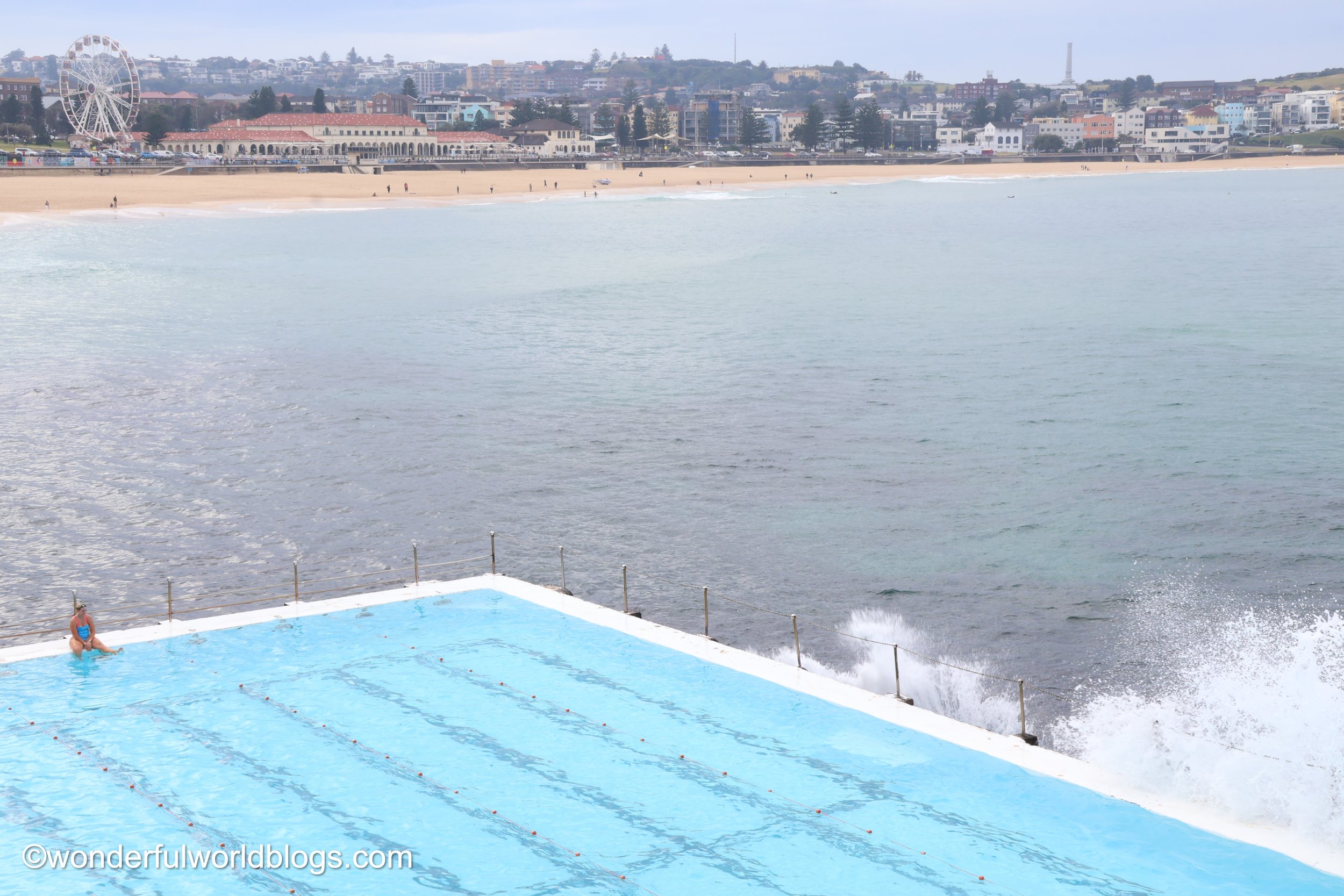
In the art gallery across from the opera house there was an exhibit of a myriad of tiny shoes, a reminder of the Aboriginal children who were forcibly removed from their families for 're-education.’ In the zoo I saw ring-tailed lemurs trapped behind a glass wall, the same animals that I had observed jumping gaily from branch to branch on a recent trip to Madagascar. It was raining at Bondi Beach, although that didn't stop the surfers or swimmers in the Bondi Icebergs outdoor pool. On the whole Sydney retains much of the British character of its founders, though I doubt you will find kangaroo, emu or crocodile pizza toppings in your average restaurant back home anytime soon.
©wonderfulworldblogs.com

If you are enjoying WWB
please Buy me a coffee
by clicking on the image above.
This will help fund the website
& future projects.
Thanks for your support!
Matthew
The Blue Mountains
The early settlers saw the range of mountains that rise up thirty miles west of Sydney as impassable, naming them “the Great Dividing Range”, but then they had passed up the opportunity of asking the Aborigines for directions. Originally inhabited by the Gundungurra and Darug the Blue Mountains derive their name from the light watercolour wash that covers them like a veil, caused by the preponderance of eucalyptus trees.
My train journey from Sydney was rather a convoluted one due to a power failure (kangaroo on the line?), involving multiple changes and replacement bus services which seemed to confuse the station staff as much as me, while also reminded me fondly of home. From the British perspective there was a rather confusing list of place names. One moment I was in Richmond, the next Penrith, then finally I arrived in Katoomba via Emu Plains. While failing to see any of the region's rare mammal species (such as the spotted-tailed quoll, the yellow-bellied glider or long-nosed potoroo) I did see the famous Three Sisters rock formation, which overlooks a panorama of blue valleys and escarpments covered in thick bush. The name comes from a Dreamtime story about a Kedumba leader who, losing a battle against a rival tribe, turned his three daughters into stone (a power unfortunately not bestowed on your average parent) so they wouldn't be captured. Unfortunately he was killed before he could reverse the spell.
Whitsunday Islands
Queensland, in the north east, is the second biggest state. If it were a country it would be the 17th largest in the world. The state's claim to fame is the Great Barrier Reef the largest in the world stretching 1,429 miles and providing food, shelter and hunting grounds for a myriad of creatures, the most famous being the clownfish Nemo. The reef was made by one animal, the tiny coral polyp. (You can imagine the mummy polyp saying to her child, "listen dear, if we all work together we can build something truly great, my little polyp.") Unfortunately, that beast the human, in league with the evil coral-eating starfish, have been causing havoc down under, Down Under. Climate change and the run off from mining and agriculture have halved the area of coral in the last thirty years, and the whole reef might disappear in the next few decades.
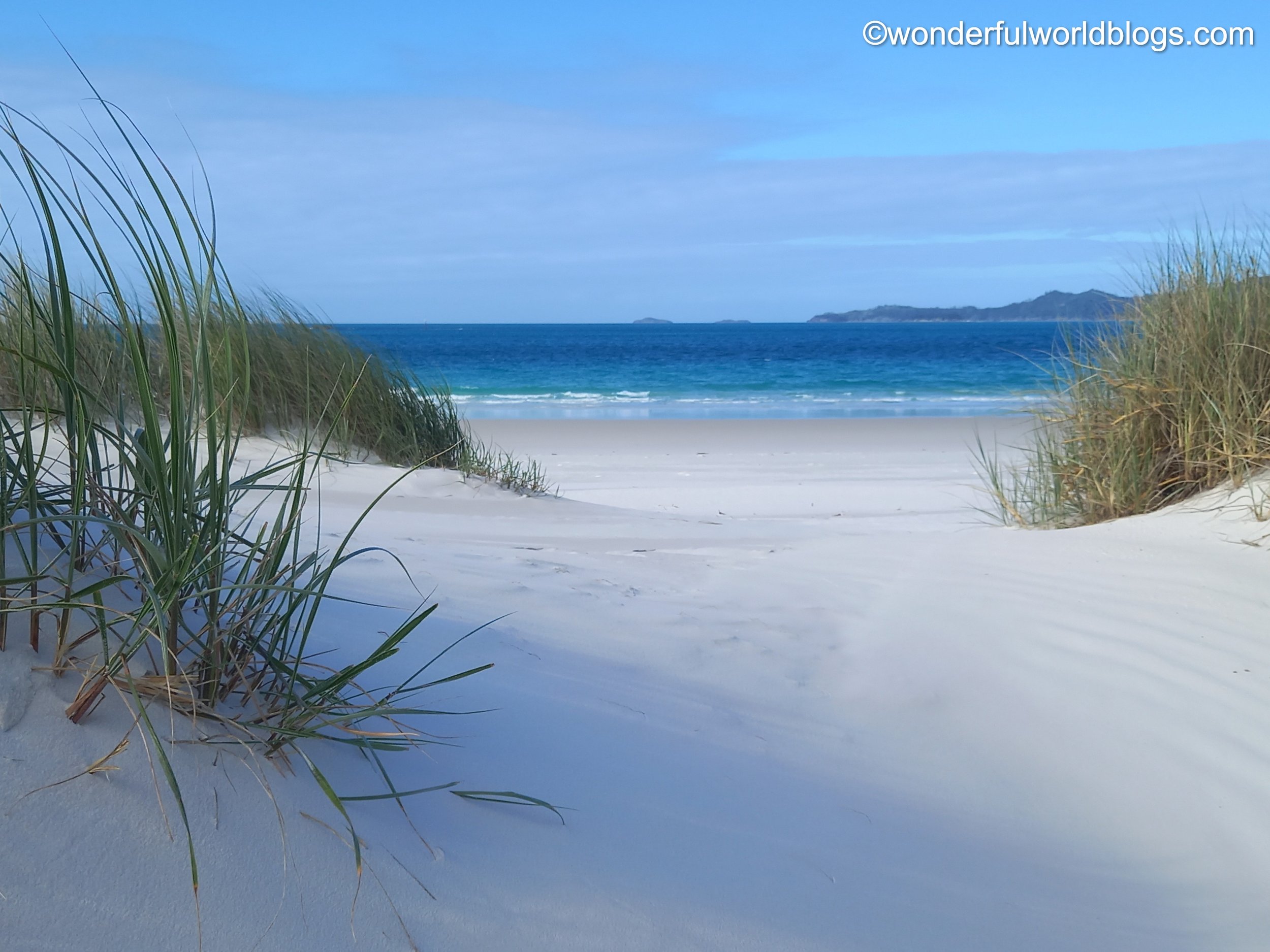
Towards the south of the reef lie the Whitsunday Islands, traditionally home to the Ngaro people, but named after the day of Captain Cook's arrival in 1770. Of these the jewel in the crown is Whitehaven Beach on Whitsunday Island where I camped for four days - seven kilometers of white powdery sand and sparkling sea backed by low hills covered in thick bush. There are no buildings, water or electricity and no rubbish. It is rated one of the ten best beaches in the world.
Brisbane
A couple of hours' flight south of the Whitsundays lies Brisbane, Oz's third largest city with a population of 2.6 million. It was home to the Aboriginal people for 22,000 years, and then, from 1823, to a bunch of convicts too badly behaved even for Sydney.
The region is home to plants such as the Brisbane wattle and weeping lilli pilli, birds such as the noisy miner, reptiles including the bearded dragon, not to forget the common ringtail possum. It was also the birthplace of the Bee Gees.
The locals like to call the city “Little London”, and indeed the bends of the Brisbane River (at 400 million years, one of the oldest in the world) do resemble the Thames, and the premier attraction, the concrete South Bank Centre, is reached by a pedestrian bridge and flanked by a large Ferris wheel. Inside the centre arguably the finest art is Aboriginal, sometimes loosely representational - telling stories of the land, its people and animals - but mostly abstract, with dynamic, colourful patterns effortlessly bridging the divide between the ancient and modern.
This modern, entertaining city will be the venue for the 2032 Olympics. Paris and LA being hard acts to follow they are already busy sprucing themselves up, although the streets and buildings seemed in fine fettle to me. Despite the evident prosperity there are many homeless people, including a disproportionate number of Aborigines. To try and stem the 'problem' the council have made homelessness illegal. In response the cathedral, to their credit, have made their grounds available to rough sleepers.
I met Gary as he bedded down for the night amongst the gleaming towers of the CBD. After expressing dismay at the recent riots in England he told me how he had been raising cash on the streets to supplement his income, not for long he insisted, just a year and a half. He was incredibly honest and eloquent about his predicament, telling me how he couldn't work because of mental health issues and how he got a criminal record as a result of a fight, in which he acted in self-defence (I believed him). He drew a divide between himself and other homeless people who have lost themselves in drugs and despair. I suggested he got in touch with the kindly lady minister at the cathedral, but he told me he preferred the freedom of his present way of life.
Adelaide
Adelaide, in the south of the country, was home to the Kaurna people for hundreds of generations before the British landed at the cheerfully named Port Misery, as they came to call it, in 1836. Within a few decades the indigenous culture had been largely destroyed and these days you are more like to meet someone speaking Vietnamese than Kaurna. The last speaker of the language died in 1929, although extensive documentation at the time has enabled modern efforts to revive the tongue.
The British named their city in honour of Queen Adelaide of Saxe-Meiningen, wife of King William IV. Unlike Sydney and Brisbane, Adelaide was founded by free settlers not convicts, and the city quickly became a prosperous one, with wide streets laid out on a (rather monotonous) grid centered on Victoria Square, surrounded by parks. In 1894 South Australia's women became the first in the world to be allowed to stand for parliament.
The Adelaide Oval stadium, one of the world's great cricket grounds, has been hosting matches since 1884. I took shelter from a sudden downpour under the huge south stand and managed to sneak a peek at the hallowed turf. Outside there was a statue of Clem Hill (1877-1945), the world's best left-handed batsman in his time. When he was only nineteen he scored 188 runs against England and he went on to become the first person to score a thousand runs in a year, a record that stood for 45 years.
Beside the excellently curated Art Gallery of South Australia, where works range from a Holbein portrait of Henry VIII to modern and Aboriginal art, stands the treasure trove that is the South Australian Museum. There you can see a giant squid three stories high and an exhibit about Australian Polar explorers (surprising, as Aussies tend to complain when the temperature drops below about 18°C). The museum also holds the world's largest collection of Aboriginal artifacts, including handbags, pearl necklaces, a boomerang that is ten thousand years' old, and one that went to space...and back again! Meanwhile at Adelaide Zoo they advertise the opportunity to meet some animals in person, and then to eat some others on a barbecue.
©wonderfulworldblogs.com
Alice Springs
The Northern Territory still has a reputation for wildness - think the opposite of Neighbours or Home and Away. Up there only 1% of the population inhabits a fifth of the continent, and the main city Darwin (the Beagle visited in 1839), on the north coast, is closer to Bali than Sydney. Up there the Aboriginal communities are much more visable than in the rest of the country, constituting more than a quarter of the population. They have even managed to keep the land rights for considerable parts of the Territory, although they used to 'own' it all.
If you drive down the Stuart Highway - named after an adventurous Scott, John McDouall Stuart (1815-66) - a mere 1,500 kilometres south from Darwin, watching your supplies of water and whisky and the fuel gauge, through a succession of magnificent and remote landscapes - croc-infested swamps, the Devil's Marbles and the Daily Waters Pub, established in 1893 and famous for the collection of underwear hanging on its walls - you will arrive at the charmingly named city of Alice Springs, situated roughly in the red centre, 1,200 kilometres from the sea. (Unfortunately, I didn't have time for this epic road-trip, or the money for the luxury Ghan Train that follows the same route, first blazed by Afgan-led camel trains, so I flew in from Adelaide.)
The area of present-day Alice was home to the Aranda people for forty-thousand years. They called it Mparntwe, meaning “watering place”. Then in 1871 an enterprising Australian named Charles Todd brought the telegraph to the area, as he had to much of Australia, and named the new settlement after his wife. At first the only way to reach her was several weeks' journey on a camel, and the population was tiny. The arrival of the railway in 1929 put the place on the map, and today nearly thirty thousand people call the city home, of whom 21% are Aboriginal.
Approaching by air the vast desert looked like the surface of Mars, with the small city plonked down in the middle. In the arrivals hall there were emu, eagle and kangaroo models and the carpet was decorated with Aboriginal designs. You enter the low-rise city through a gap in a high-rise line of red mountains. Alice is like an Australian version of small town America, with malls, hipster cafes and some rough-looking bars, centred on Todd Mall. On a grassy patch to the side of the Mall sat some Aboriginal people, some selling wares they had produced, some just lounging about in the sun, but most with a rather lost looking expression (one I frequently exhibit myself). The lucky few had their art for sale in one of plethora of traditional art galleries, some of it of international quality, plus some tea-towels and boomerangs probably made in China. The Mall runs alongside the Todd River, which was bone dry when I visited. Like the weather, which ranges from 45 to minus seven degrees Celsius, as the local saying goes, in Alice "the rivers run dry or ten feet high" (up to twenty feet, in fact, high enough to sweep away your car). Above it all sits Anzac Hill which commemorates Australian involvement in a series of pointless conflicts that Britain dragged them into, from the Boer War to Vietnam, to Iraq and Afghanistan. Aboriginal people have often volunteered, but have not always been well-treated on their return.
The city embraces quirkiness. On the dry river they hold the Henley-on-Todd Regatta, during which competitors run along inside bottomless boats. Alice is also Oz's ballooning capital, hosts the world's largest beanie festival and is the only place in the country where you don't need to pay for a snake catcher. Camel racing has now moved to Uluru (formerly known as Ayers Rock, which I will visit later). In keeping with its position in the middle of the desert the city is home to the Royal Flying Doctor Service and the School of the Air, which broadcasts lessons online (previously by radio).
Within a few minutes of Todd Mall you are in the desert, the dry red earth crunching under foot, the vegetation and flowers alien to foreign eyes, the sky a deep blue. On the horizon sits an American spy base (US troops were stationed here in World War Two and have never left). As the sun set people unloaded barbecues from the back of their cars, while nearby an abandoned vehicle slowly rusted away. Alice appears in Priscilla, Queen of the Desert, and my first night I danced with a groovy Aboriginal lady called Priscilla, to Red, Red Wine.
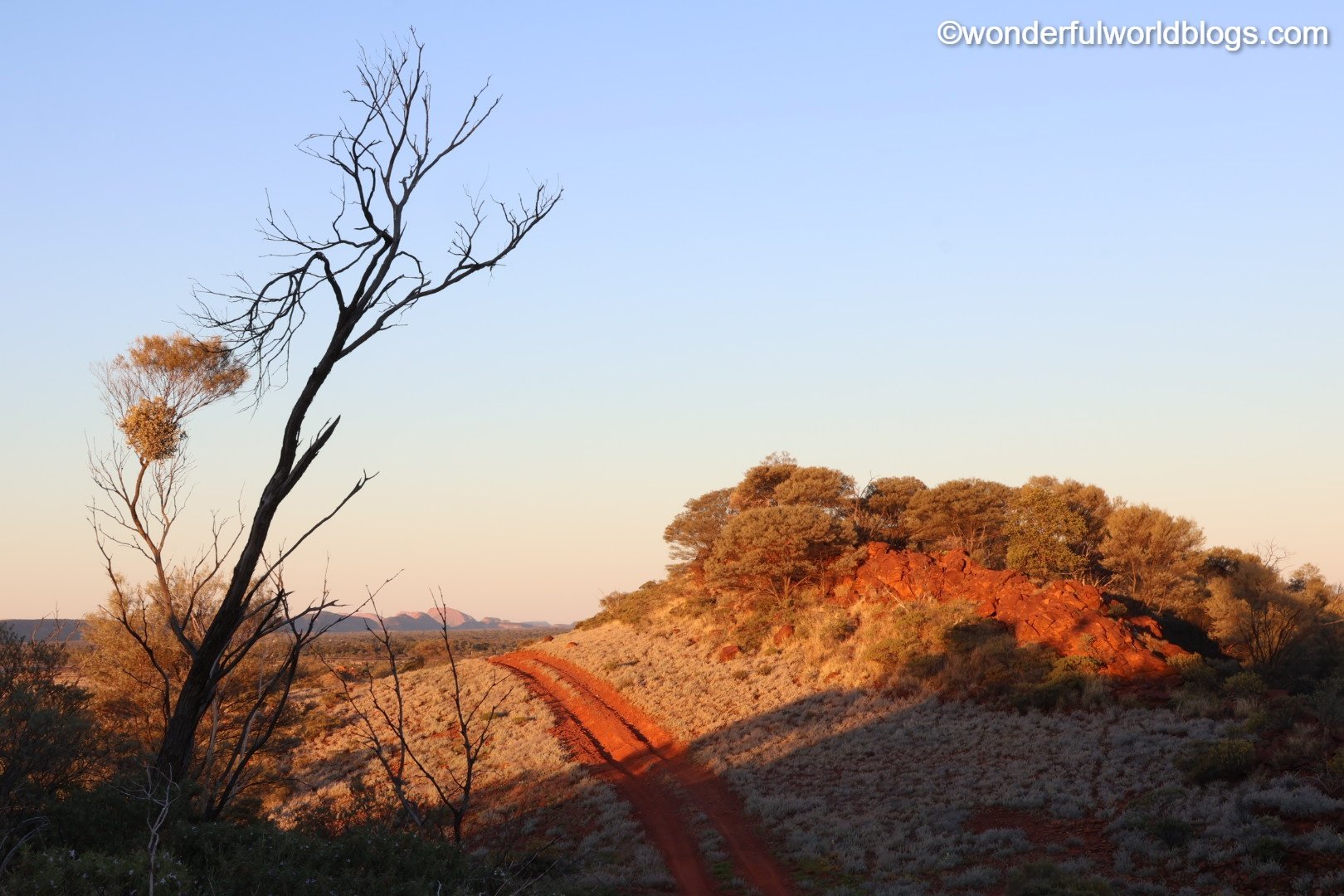
According to local legend the West MacDonnells mountain range, which stretch some 150 kilometres, was formed by a giant caterpillar crawling along and gouging out the earth as it went. It then turned into a butterfly, which still gazes down on the inhabitants. These are magical mountains, millions of years old. In the early morning birds call out to each other across the Stanley Gap, their song echoing around the narrow canyon and the sparkling stream that runs through it. At Angkerle Atwatye, "where water moves" (known as the Standley Chasm), a sacred underground source created by ancestral beings supports a little jungle oasis. The West Macs also feature the Finke River, reportedly the oldest in the world.
For all its charm and attractions Alice has a dark side which often features on Australian news and tends to shape the opinion of the city for the majority of Aussies. Indeed, murders, robberies and drug addiction are common, and one eighth of children are homeless. I myself witnessed a lady being abducted by a gang in a car. The man at the information centre told me, "the government doesn't care about us." One unresolved issue is that land that was stolen from Aboriginal people only a few generations ago is now sold between white people for millions of dollars. But I loved Alice. It felt like the real Australia.

If you are enjoying WWB
please Buy me a coffee
by clicking on the image above.
This will help fund the website
& future projects.
Thanks for your support!
Matthew
Hobart, Tasmania
In 1642 the Dutchman Abel Tasman sighted a heart-shaped body of land the size of Ireland (and just as wet) off the south coast of Australia. He named it Van Diemen's Land, after his sponsor, the governor of the East Indies. Beating him to it by only 42,000 years were the Palawa people, who lived in and around boats wrapped in warm clothes made from the hides of cute wombats and pademelons (a small kangaroo, with a rounded derrière) who were unfortunate enough to stray into their path. Although James Cook visited in 1777 (that man really got around) it was not until 1803 that the British first founded a settlement, mainly to prevent rival claims by Napoleon.
Situated 250 kilometers from the mainland, and 'only' 2500 from Antarctica, the Brits decided the island would be an ideal place to dump their worst criminals, and Van Diemen's Land soon gained a reputation for harshness. (Ironically many of the condemned men, and a few women, who were sent there found themselves better fed and housed than in the slums back home.) In the end eighty thousand convicts were sent to the island (40% of the total sent to the whole of Australia) and most of the present-day population are descended from them. The Palawa also suffered, the original population of about 5,000 being decimated within a few decades of the British arrival. (At one point settlers were given permission to shoot them on sight.) Today the Aboriginal population has risen to about 17,000, out of a total of 580,000. In 1856, wishing to disassociate themselves from their prison-island reputation, the island was renamed Tasmania, or Tassie as it is now affectionately known.
This mountainous, forested island, with evocatively named places such as Cuckle Creek, the Bay of Fires, Savage River and Bobs Knobs (this name is no longer in use, for some reason), is home to the eastern barred bandicoot (a rabbit-sized mouse), the swift parrot (the fastest in the world) and Ariarne Titmus (the fastest in the world), and was the birthplace of Robin Hood (well, Errol Flynn). The Tasmanian Tiger is considered extinct, although with 60% of the island still uninhabited there may be a few wandering about alongside their partners in crime, the Tasmanian Devil.
Tassie's capital Hobart (population 190,000) is Australia’s second oldest city (after Sydney) and its most southerly, and one of the main departure points for Antarctica. The ships Erebus and Terror set off from there in 1839 under the command of Captain James Ross, and it is the only place in the world with a scheduled flight to the Great White Continent.
Situated at the foot of the 1,270 metre Kunanyi (Mount Wellington) this small city is centred on the harbour, the second deepest in the world, where you can still find sailing ships similar to Shackleton's Endurance in appearance. In the 1830s it was the world's foremost centre for whaling in the Southern Ocean. Its governor at the time was John Franklin, the man who later became famous for eating his boots on his ill-fated voyage to discover the North West Passage. Notable buildings include Australia's oldest theatre (1837) and its oldest pub, the appropriately named Hope and Anchor Tavern, dating from 1807.
At the airport you are greeted, prison-style, by sniffer dogs. (Luckily they are only after your fruit, veg or animal products, not your hard drugs or chocolate biscuits). Upon arriving at the harbour I headed straight to the Whaler pub on the corner of Salamanca Place to scoff a dark ale or two and savour the rollicking atmosphere, as seamen have done since 1829. Instead of sea shanties the music was provided by one of Tassie's top DJs, his deck resting inside the shell of an old piano.
Hobart has historical pedigree and a salty charm, but much like the building of the Guggenheim in Bilbao it was the opening of MONA (the Museum of Old and New Art) in 2011 that helped to boost the city's profile internationally (the museum is rated as one of the top five modern art galleries in the world). Unlike most major institutions MONA is situated in suburbia, and the building itself is hardly spectacular, with an angular rust-coloured design mostly situated below ground, albeit with fine views of Mount Wellington and the harbour. But it grabs you even as you buy a ticket on the side of a tennis court, at the rear of which you are invited to embarrass yourself on a trampoline. Descending in a glass elevator the three floors are a cross between the inside of an Egyptian pyramid, a seedy nightclub and a nuclear bunker. Art from all periods and cultures, paintings and sculpture, is mixed, seemingly at random - a mummy, a Monet, a fluffy Mondrian, an Aboriginal artist in a car with Donald Trump - with no notes on the artists or dates. The feel is that of an eccentric billionaire's mansion. Indeed, the museum was founded by the exceedingly rich Tassie businessman, art collector and professional gambler David Walsh.
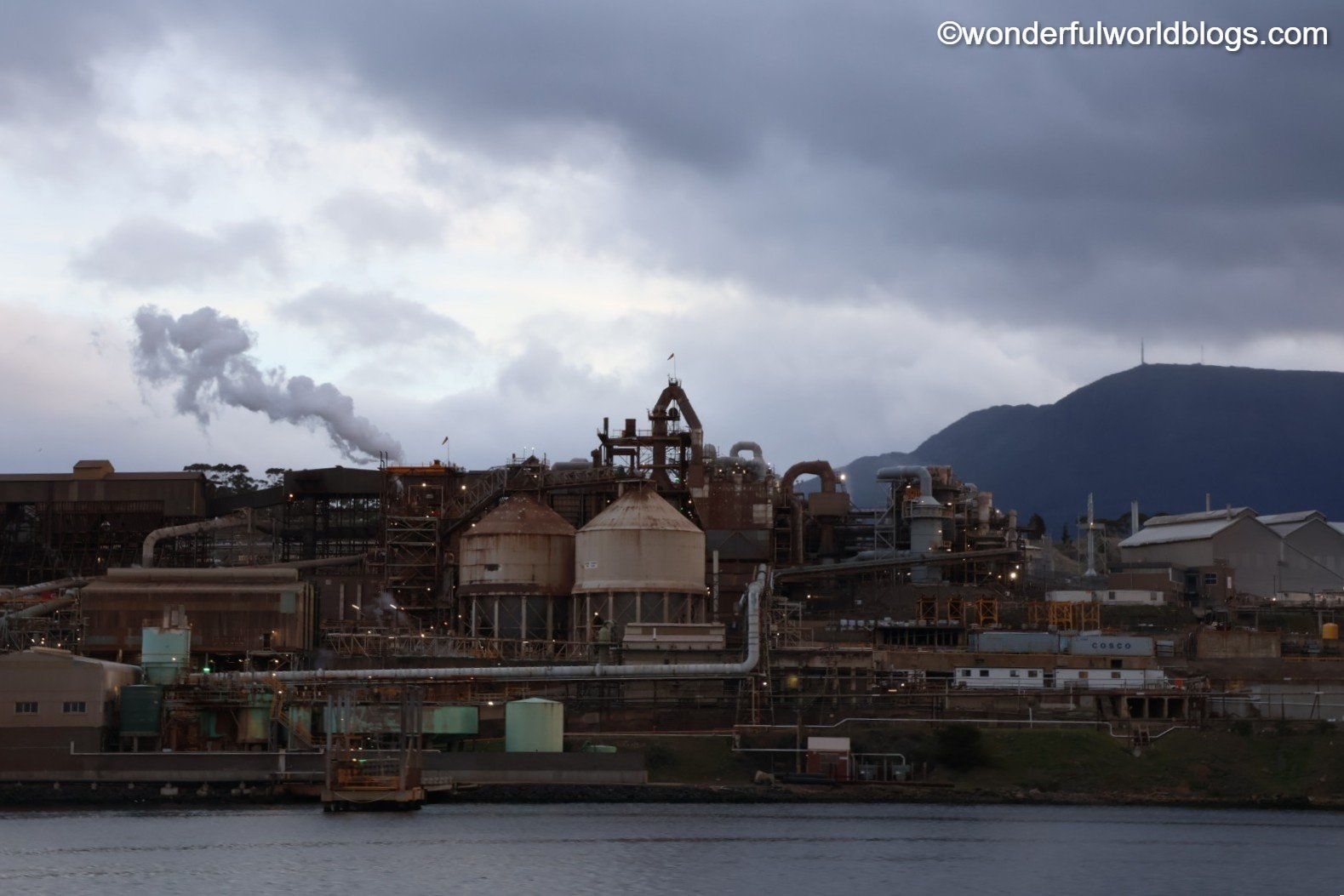
Each room has a different colour, style of lighting and material - grey, shiny red, metallic, plastic, light, dark. Liberal use is made of sound effects and music to enhance the contrasting moods, the noises echoing from one floor to the next through interconnected spaces. The overall effect is startingly original, disconcerting, daft but always entertaining. Traditional paintings tend to be overshadowed by the sensationalism of the building, the video art and the purpose-built spaces - a pitch-black maze, a corridor filled with sound and light effects, a room filled with oil. The Surrealists would have loved the place (Duchamp and Dali make appearances). I am sure some traditionalists would hate the vulgar assault on their senses, but gallery owners should make a beeline for MONA, the most original gallery in the world, and replicate what they like back home. Perhaps realising that after a visit your senses might be in need of a detox the museum lays on a ferry back to the city centre, which passes under the Tasman Bridge and by some heavy industry and Antarctic-bound vessels, reacquainting you with the side of Hobart you had probably expected to see.
The Overland Track
As well as cutting-edge galleries and old whalers' haunts Tasmania is known for its vast tracts of wilderness, including Oz's finest bushwalk, the Overland Track, rated one of the best treks in the world. Established in 1931 the trail follows the old ways of indigenous people and pioneering bushmen sixty-five kilometres through virgin rainforest and over wild mountains and Alpine plains.
Out of Hobart the rising sun cut through the mist to reveal rolling farmland reminiscent of England (the convicts brought their farming practices with them). The landscape gradually became wilder, more akin to Scotland, before morphing into a panorama of rugged cloud-capped mountains surrounded by forests of tall eucalyptus. Even to get to the start of the walk and plan an escape route had been tricky with many services not running in the winter and the bus back to Hobart only scheduled twice a week.
After an overnight stop, where I spied a rotund wombat foraging by the roadside, I was dropped at a quiet bus stop anxiously shouldering a huge pack weighing upwards of 20kg (such as Nepalese Sherpas manage with ease) including a tent and six days' worth of food, as well as a small bottle of whisky, strictly for emergencies.
Starting easily enough on well-maintained boardwalks, sparing you from the colourful swamps and alien-looking vegetation below, the route climbed up the side of Cradle Mountain, with chains fixed to the rock to help you and your rucksack up particularly steep sections. On the way you pass a misty lake with an old boathouse, which only missed the sword of Excalibur rising up from its still waters. From Marion's Lookout the rain really hit with a vengeance. Below the rocky ramparts of Cradle Mountain's summit there was an emergency shelter shaped like a diving bell (there are blizzards here even in summer). I continued along a narrow path hemmed in by awkward rocks and foliage, with sweeping views of the valley below.
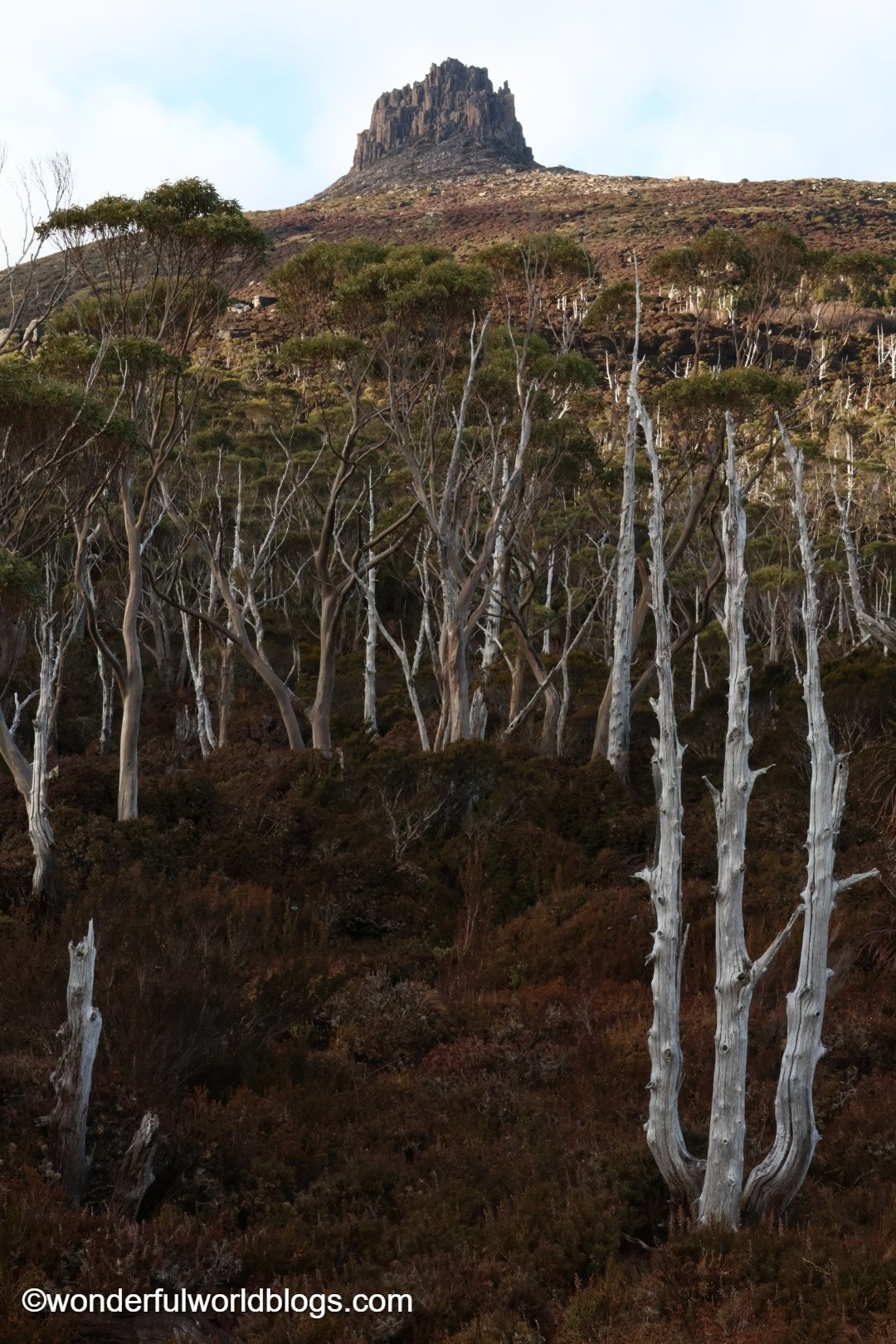
The way continued across windswept moorland and ascended through tangled forest to a high plateau at Pinestone Valley with a gallery of peaks including Mount Pelion East, looking like an evil sorcerer's castle, and the jagged outlines of Tassie's highest mountain, Mount Ossa (1,617 metres), glowing in the early evening sun.
Ironically for a country full of the descendants of convicts, walkers were quite comfortable leaving their rucksacks and valuables on the path while going off on side-tracks, but food had to be carefully stowed to prevent a crafty currawong (like a crow) from undoing the zip and helping themselves.
Barely a pass even now, but a narrow, steep way strewn with obstacles, is the Du Cane Gap, the last climb of the Track, and the way out of this highland wilderness. At its height the wind thundered through the trees between two blustery cliffs including Castle Crag, literally sounding like a speeding train. I was exhausted but elated to reach this final obstacle, but pushed on as the weather was closing in. Walking more easily now, but feeling Tasmania in my bones, I followed the path through a wise old forest to the banks of the calmly flowing River Derwent. Soon you cross the Rubicon via a swaying suspension bridge, and reach the Narcissus Hut, journey's end, with just a ferry ride across Lake St Clair (Australia's deepest lake, at 167 metres) to take you back to the comforts of civilisation. Despite the hardships I felt a tinge of sadness for leaving this place behind.
Across Tasmania there still stand simple wooden huts built by hardy trappers and bushmen, like the Old Pelion Hut in woods just off the Track, dating from 1917. Inside it is gloomy, but not at all spooky. You can easily imagine the lively conversations that must have taken place by the stone hearth, the snores from the shared bunks and the pleasure of swimming in the creek down the path. My last night I stayed in the Narcissus Hut and savoured some of that old time atmosphere, eating dinner on the porch while the rain poured down and sharing stories and supplies with a Tasmanian farmer by the light of a simple gas fire. Inside the doorway was written: "If you want inner peace find it in solitude, not speed. And if you would find yourself, look to the land from which you came and to which you go" (Stewart Udall, American, 1920-2010).
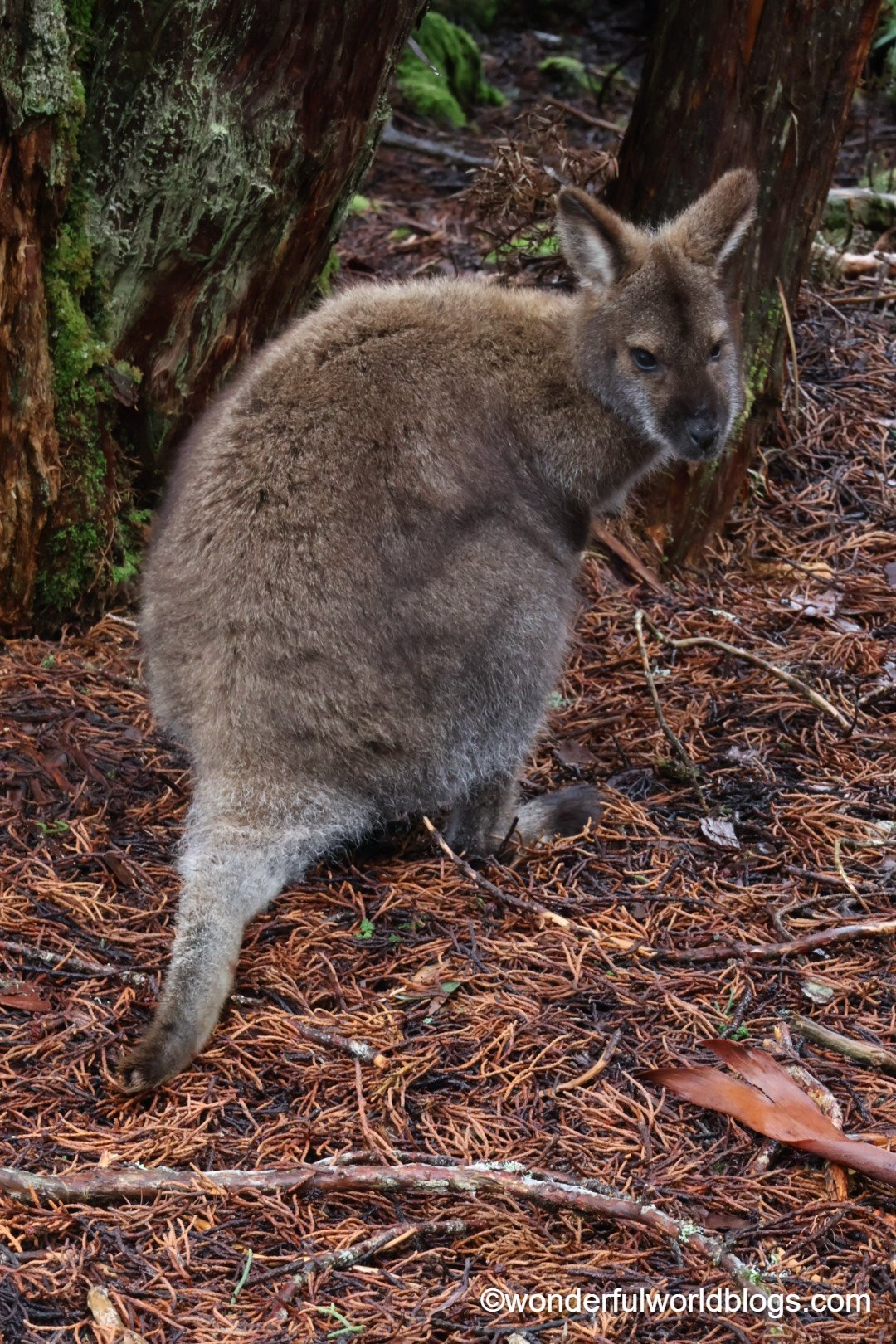
For all the tough moments - a heavy bag cutting into your shoulders, a leaking tent on a freezing night, slippery rocks and roots competing to twist your ankle and send you tumbling into some dark muddy pool - there were plenty of moments of beauty to compensate: the silence and wisdom of the forests, the purity of the air and water, fresh to drink right out of the stream, coffee and porridge in the tent, and the sight of a pademelon hopping off into the bush, which always raised a smile.
Crossing the Derwent again I caught the twice-weekly bus back to Hobart from outside the appropriately named Hungry Wombat Cafe, where I ate a large breakfast while my boots dried by the fire.
©wonderfulworldblogs.com

If you are enjoying WWB
please Buy me a coffee
by clicking on the image above.
This will help fund the website
& future projects.
Thanks for your support!
Matthew
Melbourne
With a population of 5.2 million (out of 26 million in the whole country) Melbourne is Australia’s second largest city, but close to overtaking Sydney in that regard. As generalisations go saying the latter is the business capital and the former the more down-to-earth cultural centre has some merit to it. Outside the National Gallery of Victoria is a massive sculpture of a thumb up emoji👍🏼, reflecting the city's cheeky confidence.
The region has been home to Aboriginal people for over 40,000 years and served as an important meeting place for the Kulin. Tragically about 80% of them were dead within fifty years of the Europeans’ arrival, due primarily to smallpox and violence commited against them.
Melbourne was named after the then Prime Minister of the United Kingdom by settlers from Tasmania who arrived across the Bass Strait in 1834. (It was briefly known as Batmania after an early immigrant, which I guess would have made the inhabitants Batmen and women). In 1851 the State of Victoria was formed (it is strange to British ears to hear the inhabitants calling themselves “Victorians”), and just nine days later gold was discovered, which led to the city becoming the fastest growing settlement and richest port in the Empire. Chinatown dates from this time and the city is still an international melting pot (it is the 3rd largest Greek city in the world).
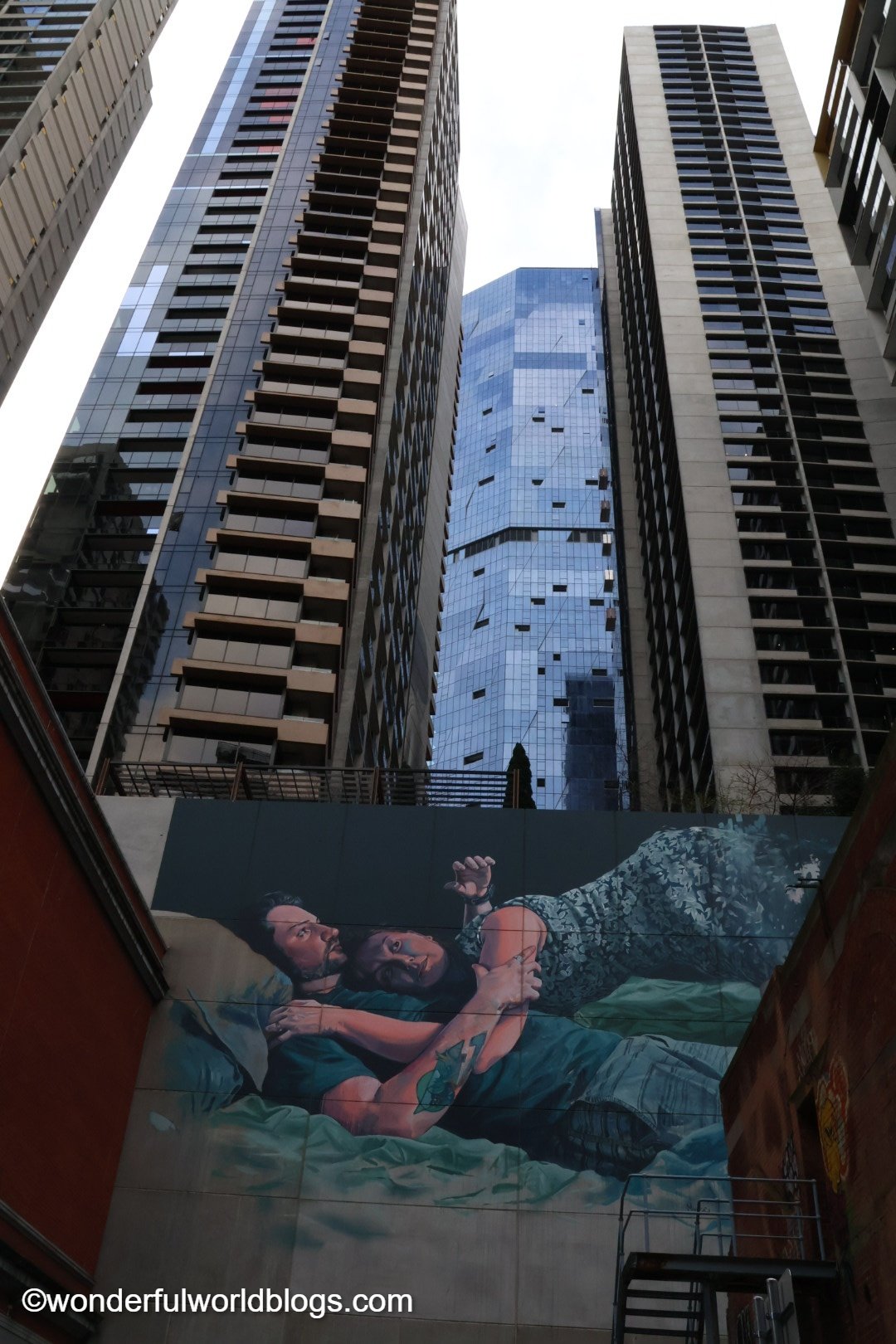
Built around the Port Phillip Bay, with the Yarra River running through its centre, the CBD feels like New York, with century-old buildings and narrow lanes filled with cool bars and restaurants dwarfed by an amazing conglomeration of skyscrapers (thirty-four new ones were built in the 2010s alone). The characterful suburbs do not include Erinsborough, the fictional setting for Neighbours, Oz's longest running TV show and one of its most successful exports, a springboard to fame for actors including Russell Crowe and Kylie.
The city is home to the Australian Open, Grand Prix and Dame Edna Everage. It has been called the live music capital of the world, with local acts including AC/ DC, Men at Work and Jim Morrison.
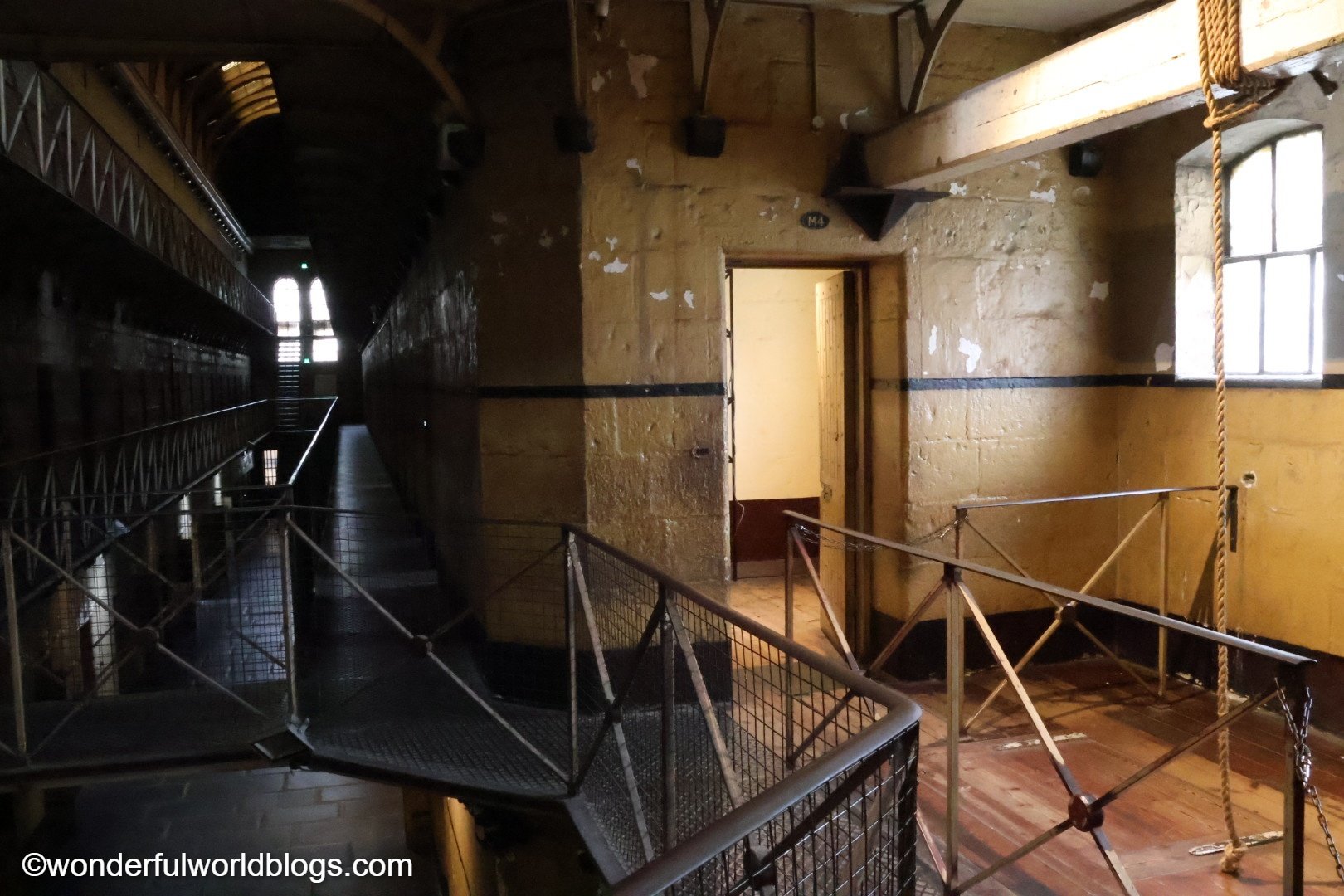
Amongst the thrusting yet easily forgotten skyscrapers of the CBD stands a sinister remnant of Melbourne's colonial past, the old gaol, opened in 1845. Based on the design of Pentonville Prison in London I paced out one of its 97 isolation cells as their occupants must have done repetitively, like caged animals, two steps across and four up and down. A text-book case in how to brutalise already damaged people, inside one cell was a silence mask, which prevented prisoners from speaking or being identified during their daily hour of exercise. Five of the first nine hangings that took place here were of Aboriginal men, while one poor woman was incarcerated after drowning a son she could no longer afford to feed. In 1851 the teenage O'Dowd sisters were imprisoned because they had nowhere else to go. The youngest prisoner was three-year-old Michael Crimmins who in 1857 was given six months for being idle and disorderly (surely a three-year-old’s right). In a cruel act of mental torture prisoners would be marched into the prison under the trapdoor of the gallows, situated at one end of the cell block. When hangings took place, as they did until 1967, the inmates could hear the proceedings from inside their cells. At the end of the block, adjacent to the gallows, is a slightly larger cell, where Australia's last and most notorious outlaw, Ned Kelly (1854-80), their Robin Hood, once resided.
A few minutes’ walk from the gaol is Victoria's impressive state library (reminiscent of the old reading room at the British Museum). Unnoticed by the rows of students beavering away at their desks you will find a truly remarkable exhibit. In a large glass case are Ned Kelly's worn boots, his Snider-Enfield rifle inscribed, "NK son of Red", with a love message for his sweetheart Kate, and a strange but hugely iconic suit of late 19th century armour. Made out of farm machinery - roughly-cut and fixed together with crude bolts - the chest plate and helmet are in one piece, with only a narrow slit to look out of. It is a wonder that Ned managed to move at all - the whole apparatus weighs 44kg, twice my heavy rucksack in Tasmania - let alone advance on police as his notorious gang staged a famous last stand at Glenrowan in 1880. The eighteen dents in the metal stand testament to the ferocity of the firefight.
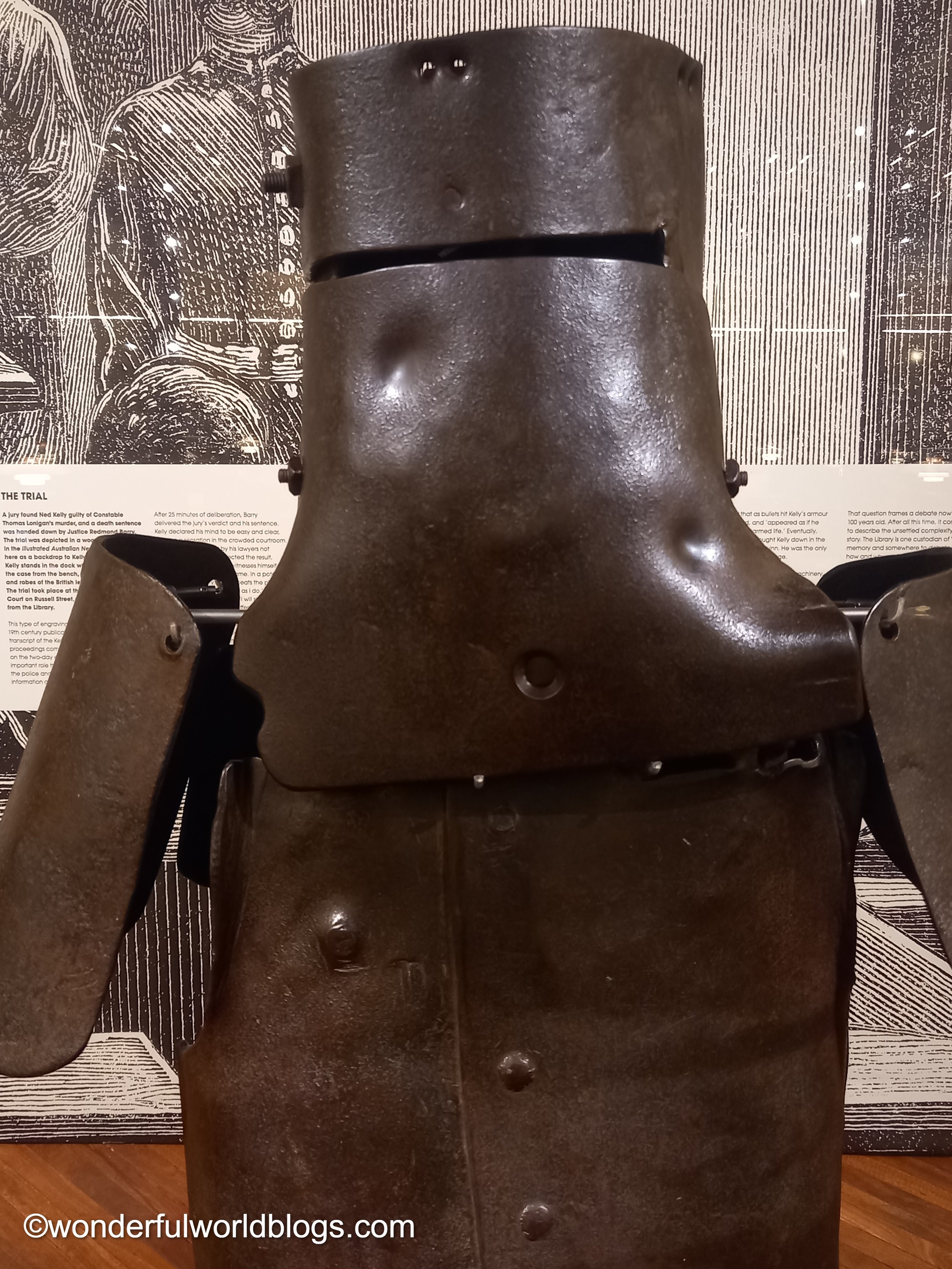
The only gang member to survive the encounter, Ned was quickly brought to trial. Despite his catalogue of crimes, including the killing of three policemen two years earlier, his exploits and life on the run outwitting Australia's finest had made him a folk hero, an Irish-Australian standing up to the, as many saw it, oppression of the British colonial authorities. He has remained so ever since. In 1906, The Story of the Kelly Gang, the world's first feature-length narrative film, was released in Melbourne.
Despite petitions by large sections of the city's population, and mitigating factors such as the rumoured violation of his sister at the hands of the police, he was sentenced to death by hanging. His last words to the judge were, "I will see you there, where I go." Indeed, Judge Barry died a few weeks later.
Kelly spent a mere eight days in that cell at the Old Melbourne Gaol, before being hung right outside, up a short flight of stairs, while his mother, also a prisoner, worked in the nearby laundry. A photograph from his trial shows a handsome face - he was only 25 at the time - with dark, curly hair and a long beard (a fashionable look even today). His death mask (on show at the gaol) shows that his beard had been shaved off for the execution. A fragment of his skull, rediscovered years later, showed marks which indicated that it had been sawn open and the brain removed for research. But nothing could kill what many felt he stood for.

If you are enjoying WWB
please Buy me a coffee
by clicking on the image above.
This will help fund the website
& future projects.
Thanks for your support!
Matthew
Uluru
There is a Dreamtime story quoted in Brockman's Encyclopedia of Sacred Places about a tribe who, distracted by a lizard woman, failed to honour an invitation to a rival tribe's feast. There followed a great battle which ended in the deaths of the leaders of both tribes. At the bloodshed the earth rose up in grief, which became the great red rock, Uluru.
Situated 200 miles south-west of Alice Springs, near the centre of the country, the Pitjantjatjara people, known as the Anangu, first arrived 20,000 years ago, attracted by the oases and game that came to drink at them. A mere nineteen millennia later, in 1872, the first European spied the rock, like a harbinger of doom, but with the disarming name of Ernest Giles. A year later William Gosse climbed to the top and named it Ayers Rock after a South Australian politician. With the arrival of settlers the Anangu were removed to make way for the grazing of cattle. The rock has been a tourist site for almost a century now. In 1985, to prevent misuse (instances of playing golf and striptease had been recorded on the top, and 37 people had fallen to their deaths, perhaps blown off by angry spirits), the land was finally returned to the Anangu, albeit on the condition they leased it back to the government to mange jointly.
Arriving by plane (the best alternative to a twelve-hour return bus journey from Alice) this red beached whale of a rock stands proud of the vast arid plains stretching as far as the eye can see, smoke from bush fires blowing across the hot blue sky. Uluru is an “inselberg”, an island mountain, a monolith whose sheer sides rise 348 metres above the plains, but the bulk of which is hidden below the red dirt, like an iceberg. It is an incredible 550 million years old and its orangey-red colour comes from the rusting effect on the grey sandstone over that unimaginable period.
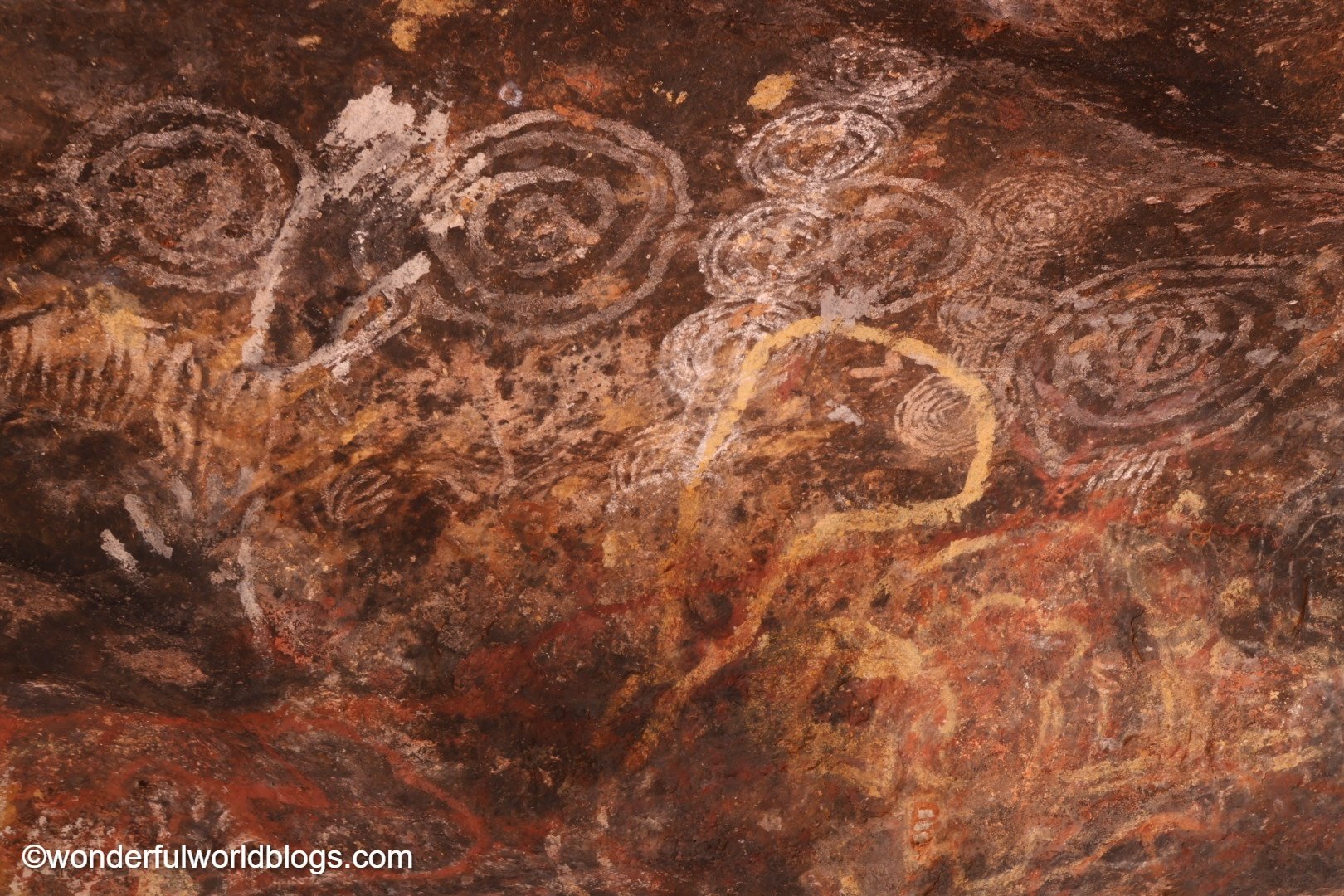
Its sheer size can only be taken in when you are there, its summit curving away out of sight, the near vertical walls towering above you, extending to either side as far as you can see. The rock is solid, uncrumbling, immortal, too steep and unyielding for vegetation. Here and there your eyes and mind follow precipitous gullys upwards, like they would the great pillars of a cathedral. At a heavenly and surprisingly deep natural spring, where trees gather to drink and birds to sing, Aboriginal people used to live, leaving mysterious, colourful, overlapping paintings on the walls of a nearby cave, looking more like modern than ancient art. The place has a huge, powerful, calm, wise, spiritual presence about it in the heat and silence of the desert. I placed my hand flat on the rock, almost expecting to feel its heart beat. After several hot dusty hours I managed to walk around most of its circumference, spying strange rock formations that your imagination turns into a giant mouth or a skull. Suddenly I heard a powerful force behind me and turned to see a mini whirlwind sucking up the dust as if the spirits of the place had awoken in anger. But the modern Aboriginal people were conspicuous by their absence.
In 2023 a nationwide referendum took place entitled “Indigenous Voice to Parliament”, or simply “The Voice”. It proposed the establishment of a federal advisory body made up of Aboriginal and Torres Strait Islander people who would represent the views of indigenous communities on a national stage. It was defeated by a resounding 60% to 40%, every state voting “No”. Some I spoke to blamed racism, others pointed to faults in the proposal itself that might have led to a stalemate in parliament over various issues. Regardless, the status quo established back in 1770 when Captain Cook landed in Botany Bay and claimed the continent for the British Crown had been maintained. The approximately 950,000 Aboriginal people (roughly the same number in 1770 as today), members of the oldest continual culture in the world, remain voiceless in their own land.
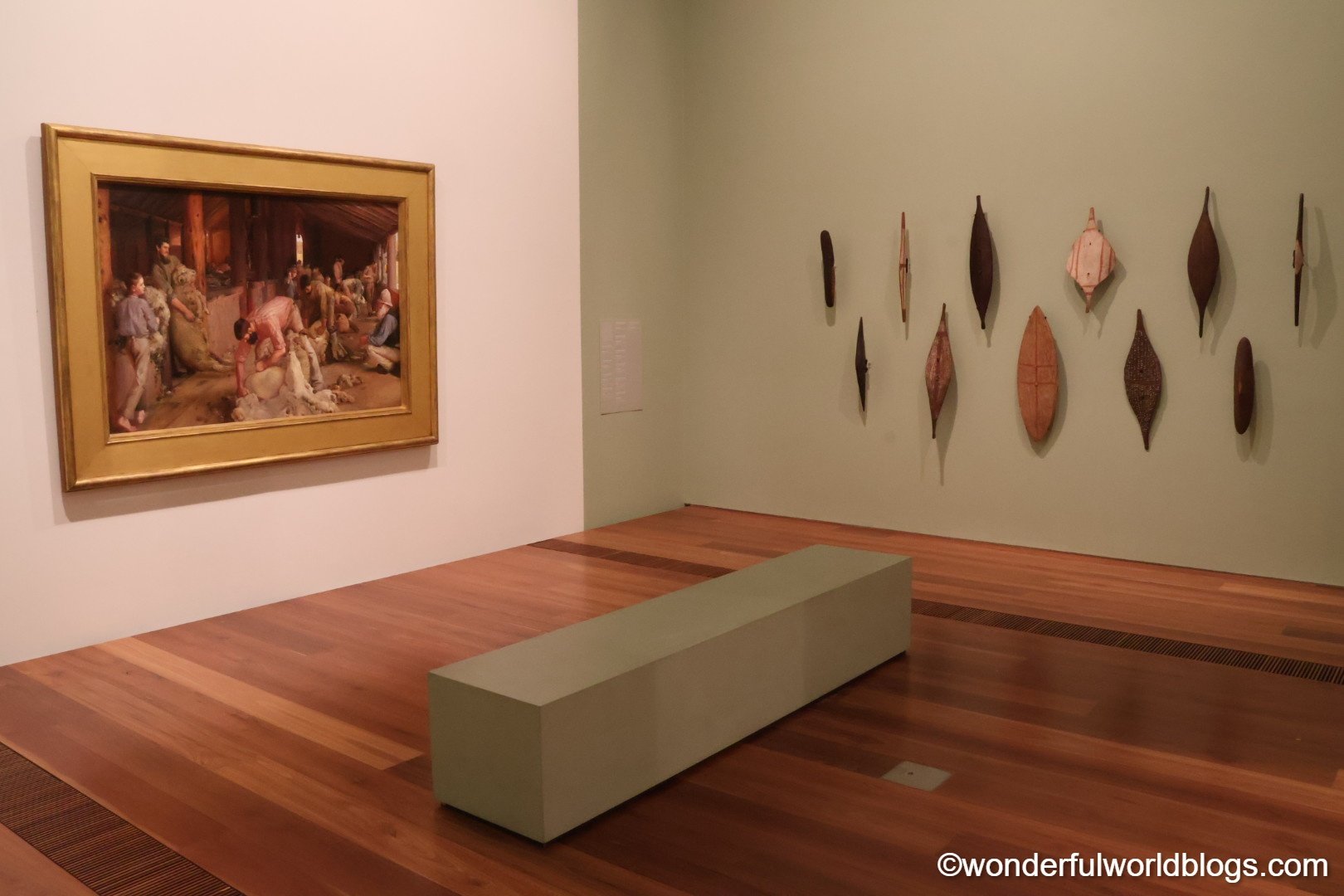
In a small room in the National Gallery of Victoria in Melbourne are exhibits showing two very different sides of Australia. On one wall is a proud, naturalistic, painting of men Shearing the Rams by Tom Roberts dating from 1890, a scene that could easily be from Wales if it weren't for the bright sunshine and the sunhats worn by some. On another is a collection of Aboriginal shields, some as thin as sticks, some leaf shaped, simply decorated, with plain colours and abstract designs. Two very different worlds in one room, in one country.
©wonderfulworldblogs.com