
Australia Travel Blog
Preview
Travel guide including history,
Aboriginal Australians & photos
See the Australia Photo Gallery here,
including Sydney, Uluru & Tasmania
Australia, from the Latin "Terra Australis", meaning "Southern Land", is the world's sixth largest country, two-and-a-half times the size of India. But with only 27 million people, compared to India's 1.4 billion, she has one of the lowest population densities on earth. She is also the oldest, flattest, lowest and driest inhabited continent, or the largest island, if you prefer. Her landscapes range from desert (the Outback, the largest area, in the centre), to tropical rainforests in the north-east, and (relatively low) mountain ranges. Because of her long isolation much of the plant and wild life are unique. As well as the cute animals such as the koala, kangaroo and kookaburra, there are plenty of creatures that you wouldn't want to find at the bottom of your sleeping bag after a night out in the bush.
The ancestors of the Aborigines arrived from south-east Asia as long as 65,000 years ago and they are now the world's oldest surviving civilisation. Theirs is an oral culture with spiritual values based on reverence for the land and a belief in the Dreamtime. They were hunter-gatherers who, due to their isolation from other tribes, spoke up to 250 distinct languages when Europeans arrived. Today a remarkable 160 are still in use.
The first European was a Dutchman called Captain Willem Janszoon, who stumbled upon this great landmass in 1606 (imagine a trip to Mars without a map). As a result until the early 19th century Australia was known as New Holland. However, the real problems didn't really occur until those global masters of conquest, exploitation and slavery - the British - arrived, the first being Captain James Cook. At first he pretended his aims were innocent ones - exploration and botany - when he landed in a certain bay in 1770. However, he soon showed his true colours when, in a remarkable display of chutzpah, he claimed the entire east coast for Britain, naming it New South Wales (despite the prevalent sunshine and distinct lack of sheep). When the American War of Independence took place that continent was no longer available as a dumping ground for Britain's unwanted citizens, so her politicians decided to introduce some of their finest citizens - convicts - when the First Fleet of eleven ships arrived in 1788. Half of them were Londoners, but also on board were 87 chickens and 44 sheep. To be fair to the convicts, most of them were only guilty of minor crimes such as petty theft, so they were probably better people than the soldiers and their commanders. (The reaction of the condemned men and women on arrival is not recorded, but even without the cafes, bars and parks you encounter today one imagines that they were pleased that they hadn't been sent to Siberia.)
As was tragically common in the British Empire in the years following an invasion, the indigenous population, which had originally numbered about a million, 'declined' (it's hard to find a word), mainly due to the spread of diseases, but also as a result of conflict and murder. Today only about 4% of people identify themselves as Aborigine, although there are about a hundred thousand rock art sites extant, which tells you something. These days Australia is culturally diverse, with one of the highest foreign-born populations in the world, even if the Aboriginal people are sadly depleted and poorly treated in their own country.
Sydney
Sydney, Australia’s largest city with a population of 5.5 million, was founded on the 26th of January 1788, and named after the British home secretary at the time. Today the Aboriginal people, who previously had a settlement on the site called Warrane, refer to the 26th as "A Day of Mourning."
Nevertheless, its friendliness is apparent from the outset, the guard on the airport train warmly greeting visitors and welcoming Aussies home. The city is like New York - skyscrapers huddled around a harbour crossed via a big old bridge, which at the time of its construction in 1932 was the largest in the world. Over its five lanes rumbles traffic, trains, cyclists and joggers. Underneath a stream of ferries buzzes about. The iconic opera house enlivens the whole skyline, its roofs like the sails of the yachts that blow by. Like NYC Sydney has sky-high property prices, but it is way cleaner and more chilled - a big city that feels like a small one. The first night I stayed in a hostel on The Rocks, the site of the first British settlement, and, until the 1970s, the main arrival point for immigrants. Under the modern building were the carefully excavated foundations of a 19th century convict-turned-respected-businessman's family home, preserved like we would Roman ruins in London.
The Cadigal were the first people to live here, but they stood no chance when wave upon wave of immigrants hit the shores. Today the country has a large Asian-Australian population, although originally the majority of newcomers were British and Irish. On my visit I met a young lady from Armagh who said she had bumped into ten people from her region. Fortunately, the area is still blessed with the profusion of bars that the early puritans disapproved of.
In the art gallery across from the opera house there was an exhibit of a myriad of tiny shoes, a reminder of the Aboriginal children who were forcibly removed from their families for 're-education.’ In the zoo I saw ring-tailed lemurs trapped behind a glass wall, the same animals that I had observed jumping gaily from branch to branch on a recent trip to Madagascar. It was raining at Bondi Beach, although that didn't stop the surfers or swimmers in the Bondi Icebergs outdoor pool. On the whole Sydney retains much of the British character of its founders, though I doubt you will find kangaroo, emu or crocodile pizza toppings in your average restaurant back home anytime soon.
©wonderfulworldblogs.com
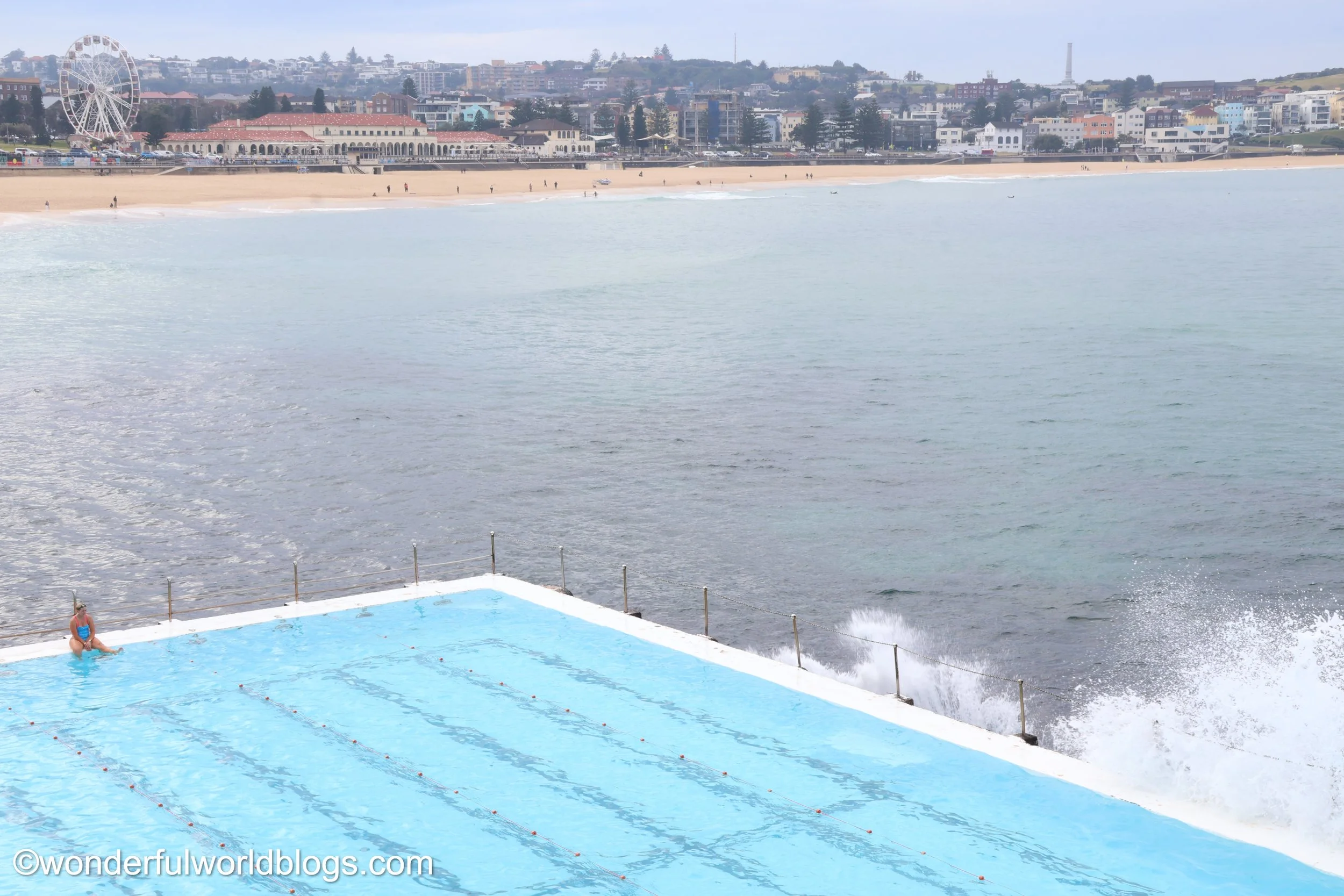
Bondi Icebergs Swimming Club
Enjoyed the preview? Instantly download beautifully designed PDFs, including the complete Australia blog and more destinations, in the Shop. Includes Alice Springs, Tasmania, the Overland Track, Melbourne, Ned Kelly and Uluru.
Lorem ipsum dolor sit amet, consectetur adipiscing elit. Vestibulum id ligula porta felis euismod semper.